What Type of Honda Motorcycle Should I Get? Free Quiz
Jul 21, 2026
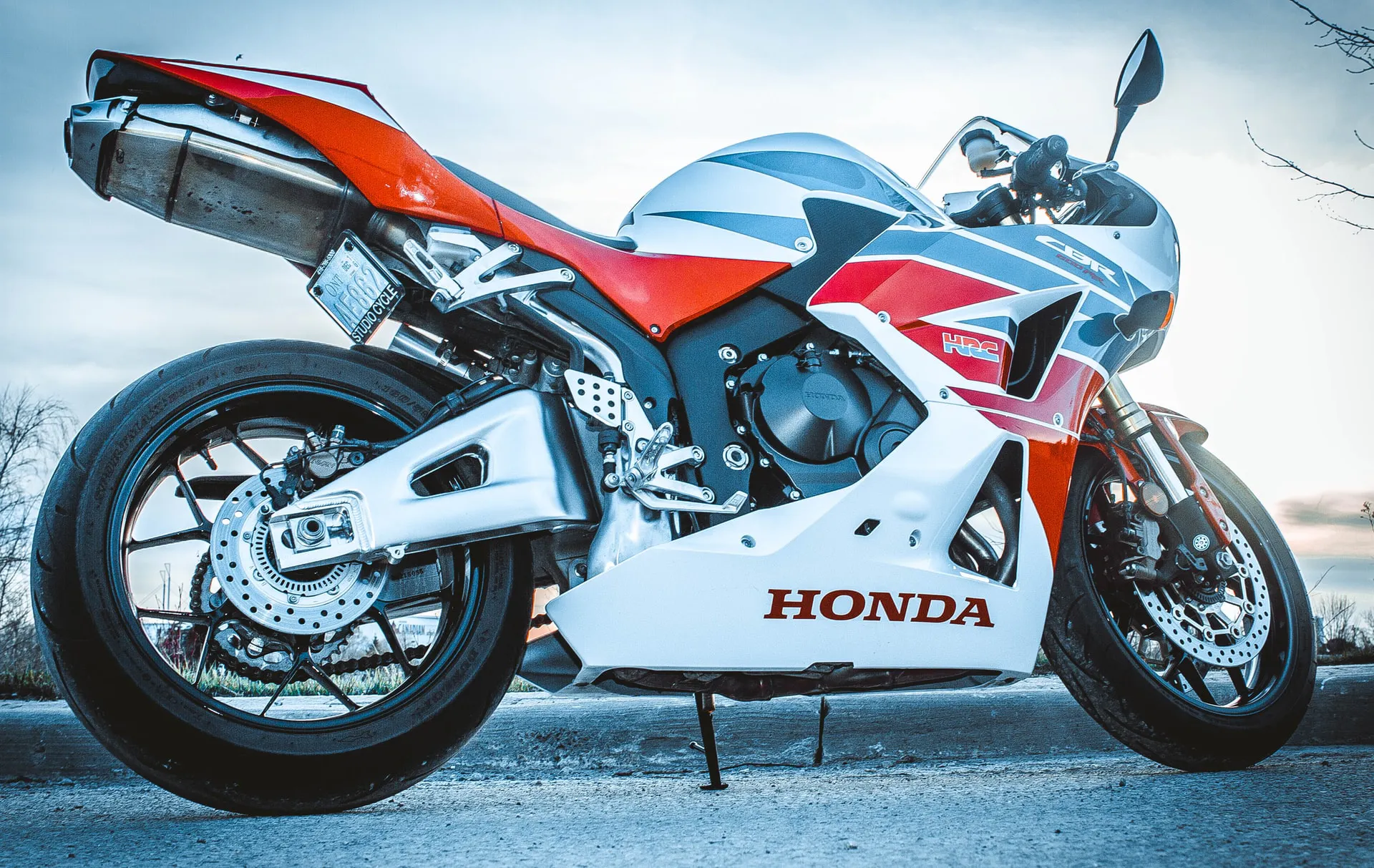
Honda sells more motorcycle categories than any other manufacturer, from a 109cc automatic that costs less than a used dirt bike to an 1833cc flat six with a trunk and heated seats. Our quiz asks 16 questions about your experience, your inseam, your budget, and how you want to shift, then matches you to specific Honda models with pricing and seat heights attached. It covers current 2026 bikes and used models Honda no longer sells.
Take the Quiz
Why Honda Needs Its Own Quiz
Most bike recommendation tools sort you into a category and stop there. That works when a brand builds three things. Honda builds seven, and the gaps between them are wide enough that landing in the right category still leaves you with a dozen models and no way to choose.
Look at the range in one lineup. The Navi starts at roughly $1,999. The Gold Wing Tour DCT runs about $29,700. Between them sit cruisers with 25.9 inch seats, dual sports with 35.2 inch seats, and a 999cc naked bike that arrived new for 2026. Displacement runs from 109cc to 1833cc. No other manufacturer asks a shopper to choose across that much ground, which is why generic quizzes tend to hand every Honda shopper the same Rebel 500 answer.
Honda also offers three ways to shift, and two of them barely exist elsewhere. That single decision reshapes which models are even available to you, and almost nothing online asks about it before making a recommendation.
If you are still deciding between brands rather than between Hondas, start with our full motorcycle quiz instead, which covers the whole market.
How the Quiz Works
Sixteen questions, grouped into four sections, each one narrowing the field.
Riding experience. The first four questions set the ceiling. They cover how long you have ridden, what engine size you are comfortable with, whether this is a first bike or a step up, and how much formal training you have. Everything after this is scored inside the limits these answers set, so a rider with no street miles will not be handed an Africa Twin no matter what else they select.
How you will ride. You pick the Honda categories that appeal to you, using Honda's own naming, then tell us what the bike will mostly be doing and how often you carry a passenger. Riders who choose an off pavement answer get one additional question about how much of that riding is actually on dirt, since that is where Honda separates its Adventure and Dual Sport families. Street riders never see that question.
Bike preferences. Engine character, transmission, what pulls you toward Honda in the first place, and what matters most in how the bike rides.
Fit and budget. Height, inseam, budget, and whether you are open to used. Seat height gets scored against your inseam rather than your height, because reach to the ground is what determines whether you can hold a bike up at a stop.
You get a primary match, an alternative in the same category, and where the budget supports it, a used pick with a price range and notes on what to inspect.
Honda's Seven Motorcycle Categories
These are Honda's own categories, matching how the company organizes its lineup.
| Category | What it is | Example models | Seat heights |
|---|---|---|---|
| Cruiser | Low seats, relaxed position, feet forward | Rebel 300, Rebel 500, Shadow Aero, Fury | 25.9" to 27.5" |
| Standard | Upright, unfaired, does a bit of everything | CB300R, CB650R, CB1000F | 31.3" to 31.9" |
| Sport | Fairings, forward lean, higher revving | CBR500R, CBR650R, CBR1000RR | 30.9" to 32.7" |
| Adventure | Tall suspension, long range, pavement and gravel | NX500, Transalp, NC750X, Africa Twin | 31.6" to 34.3" |
| Touring | Wind protection, luggage, built for distance | NT1100, Gold Wing | 29.3" to 32.3" |
| Dual Sport | Street legal and trail capable | XR150L, CRF300L, CRF450RL | 32.7" to 37.0" |
| MiniMOTO | Small displacement, low cost, easy to park | Navi, Grom, Monkey, Super Cub, Trail125 | 30.0" to 31.5" |
Honda also uses a Supersport label for the CBR600RR and CBR1000RR, which the quiz treats as Sport. The NT1100 straddles two categories and rents as a sport touring bike.
Honda also uses a Supersport label for the CBR600RR and CBR1000RR, which the quiz treats as Sport.
Which Honda Is Best for a Beginner?
The best beginner Honda is the one you can hold up at a stop light and still enjoy a year from now, which for most new riders means something between 286cc and 500cc with a seat under 32 inches.
Four models cover almost every new rider:
- Rebel 300 E-Clutch, 286cc, 27.2 inch seat, around $5,349. Honda made E-Clutch standard on the Rebel 300 for 2026, which means the bike manages the clutch while you still choose the gears. Stalling at a light stops being a concern.
- Rebel 500, 471cc, 27.2 inch seat, around $6,799. Same chassis and seat height as the 300 with enough engine for highway ramps and a passenger.
- CB300R, 286cc, 31.6 inch seat, around $4,499. The least expensive way into a full size street bike, and light enough to manage in traffic.
- Navi, 109cc, 30 inch seat, around $1,999. Fully automatic, no shifting at all. Better suited to campus and neighborhood riding than to a commute with highway miles.
Taller beginners who want dirt capability should look at the CRF300L at $5,749, though its 34.7 inch seat rules it out for a lot of riders. Honda sells a Low Seat version at the same price with a 32.7 inch seat, and that two inch difference is what the quiz scores against your inseam.
What Honda Fits a Shorter Rider?
Riders under about 5'6" have more Honda options than most brands offer, because Honda's cruiser seats sit lower than almost anything else on the market.
The Shadow Phantom measures 25.6 inches and the Shadow Aero 25.9 inches, both lower than the Rebel. The Fury comes in at 26.7 inches. The Rebel 300 and Rebel 500 sit at 27.2 inches and weigh far less than any Shadow, which usually matters more than the last inch of seat height when you are learning to manage a bike at walking pace.
Weight is the part shoppers skip. A bike you can flat foot but cannot pick up is a bike you will stop riding. The quiz scores seat height against your inseam and factors weight separately, which is why a shorter rider asking for an adventure bike gets steered toward the NC750X at 31.6 inches rather than the Africa Twin at 34.3 inches.
Should You Get Manual, DCT, or E-Clutch?
Honda is the only manufacturer selling three different ways to shift, and choosing between them narrows the lineup more than almost any other answer in the quiz.
Manual is the standard clutch lever and gear lever, available on nearly every model Honda builds. It is the widest selection and the lowest price for any given bike.
DCT is Honda's dual clutch gearbox. There is no clutch lever at all, and the bike either shifts itself or shifts on your command through paddle triggers. It shows up on the Rebel 1100, the NC750X, the Africa Twin, the NT1100, and the Gold Wing. Choosing DCT typically costs several hundred to a couple thousand dollars over the manual version of the same bike, and it rules out every Honda under 745cc. If DCT is what you want, the Honda rental listings are the cheapest way to find out whether you like it before committing.
E-Clutch keeps the gear lever and removes the clutch lever. You still pick every gear, and the bike handles engagement. Honda currently offers it on the Rebel 300, the CB650R, and the CBR650R.
There is a fourth path for riders who want no clutch lever on a small bike. The Navi runs a fully automatic CVT, and the Super Cub C125, Trail125, and Dax 125 use semi automatic gearboxes with a heel toe shifter and no lever at all.
Rebel 300 vs Rebel 500 vs Rebel 1100
The Rebel family covers three engine sizes on nearly identical seat heights, which is why shoppers get stuck comparing them.
| Spec | Rebel 300 E-Clutch | Rebel 500 | Rebel 1100 |
|---|---|---|---|
| Engine | 286cc single | 471cc parallel twin | 1084cc parallel twin |
| Seat height | 27.2" | 27.2" | 27.5" |
| MSRP | ~$5,349 | ~$6,799 | ~$9,699 |
| Transmission | E-Clutch | Manual | Manual or DCT |
| Best for | First bike, city riding | First bike with highway miles | Second or third bike |
Riders who want the Rebel 1100 with a fairing and hard bags should look at the Rebel 1100T at around $10,899, which is the factory bagger version.
The 300 and the 500 are the same motorcycle in feel, and the seat height is identical, so the choice comes down to whether your riding includes sustained highway speed. The 1100 is a different machine underneath, running the Africa Twin engine with cruise control and ride modes, and Honda positions it well past a first bike.
Riders who want the Rebel 1100 with a fairing and hard bags should look at the Rebel 1100T at around $10,899, which is the factory bagger version.
Should You Buy a Used Honda?
Buying used makes sense for most Honda shoppers, because the models Honda no longer sells are the ones that hold up best and depreciate least.
A used Rebel 500 from 2017 through 2025 runs roughly $3,500 to $6,000 against $6,799 new. A used Shadow Aero, which Honda built with almost no changes from 2004 through 2025, sits around $3,000 to $6,500. Shaft drive on the Shadow family means no chain to adjust or replace, and parts availability on a model built for two decades is about as good as it gets.
The quiz includes a used path. Tell it you are looking used or open to either, and it will surface a used pick alongside the new match, with a year span, a price range, and what to check before you hand over money.
Rent the Honda Before You Buy It
A dealer test ride tells you almost nothing. Fifteen minutes on a controlled loop will not reveal whether a 34.3 inch seat works for you at a red light, whether a Rebel 500 wears you out on your actual commute, or whether DCT feels right or feels wrong.
Riders Share lists Hondas from owners across the country, including the Gold Wing, the full Rebel lineup, the CB650R, the Africa Twin, the Grom, and the CRF family. Rentals start as low as $25 per day. Take your quiz match out for a full day on your own roads, and you will know within the first hour whether it is the bike.
Frequently Asked Questions
What is the cheapest new Honda motorcycle? The Navi is the least expensive new Honda motorcycle at roughly $1,999. It runs a 109cc engine with an automatic transmission, a 30 inch seat, and a lockable storage bin where the fuel tank would normally sit. The next step up is the Grom at about $3,599, which adds a manual five speed gearbox.
Which Honda motorcycles come with DCT? Honda offers its Dual Clutch Transmission on the Rebel 1100 and Rebel 1100T, the NC750X, the Africa Twin and Africa Twin Adventure Sports ES, the NT1100, and the Gold Wing and Gold Wing Tour. DCT is a factory option on those models rather than a separate lineup, and it typically adds several hundred to a couple thousand dollars over the manual version of the same bike.
What Honda motorcycle has the lowest seat height? Among current and recent Hondas, the Shadow Phantom sits lowest at 25.6 inches, followed by the Shadow Aero at 25.9 inches and the Fury at 26.7 inches. The Rebel 300 and Rebel 500 both measure 27.2 inches and are lighter than any of the three, which usually matters more than the last inch of seat height for a newer rider.
Is a Honda Rebel 500 big enough for highway riding? A Rebel 500 handles highway speeds without strain. Its 471cc parallel twin pulls to 70 or 75 mph comfortably, and riders regularly commute on one. The limit is wind rather than power, since the Rebel has no fairing, so long interstate stretches get tiring before the engine does. Riders logging more than an hour of highway at a time tend to be happier on a Rebel 1100T or an NT1100.
Does the Honda Gold Wing still come with a manual transmission? Honda still sells a Gold Wing with a conventional six speed manual gearbox, currently around $25,200. The Tour trims, which add the top trunk, heated seats, and a passenger backrest, come with DCT. Riders who want the full dresser package and a clutch lever will not find that combination in the current lineup.
Can I rent a Honda motorcycle before buying one? Riders Share lists Hondas from local owners across the country, so most riders can rent the exact model they are considering for a day or a weekend. Rentals start as low as $25 per day. A full day on your own commute or your favorite road tells you far more about fit and comfort than a fifteen minute dealer loop.
Related Articles
Mon - Fri: 8-8 CT
Weekends: 9-8 CT
