Polaris Slingshot vs. Can-Am Ryker & Spyder
Nov 22, 2024
Tags:guidecomparisonrenterrykerbuyerpolarisownerspyderslingshotcan-am
Comparing the Can-Am Ryker and Spyder to the Polaris Slingshot might feel like comparing apples to oranges, but it’s a question worth answering.
These three-wheelers, though federally classified as motorcycles, offer entirely different experiences depending on what kind of rider you are. The Can-Am Ryker and Spyder lean toward those who enjoy the feel of a motorcycle but want added stability and control. On the other hand, the Polaris Slingshot feels more like a sports car on three wheels, appealing to drivers who might not have much, if any, motorcycle experience. Both options bring something unique to the table, making the choice as much about your riding style as it is about the vehicle itself.
Below, we’ll break down the Can-Am vs. Slingshot debate to help you decide which option suits your style best.

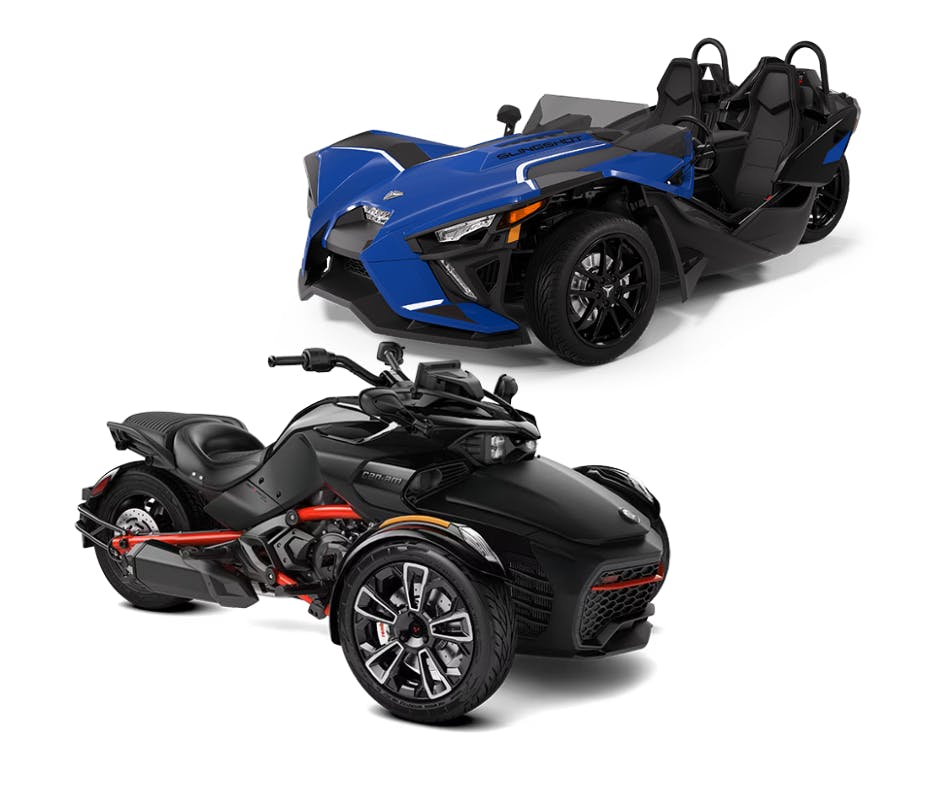
Table of Contents
- Polaris Slingshot Models: S, SL, SLR and R
- Can-Am Spyder Models: F3 and RT
- Can-Am Ryker Models: 600, 900, Sport, Rally
- Can-am vs Slingshot: Side-by-Side Comparison
- Pros vs. Cons of All Three
- Here's a Quick Breakdown to Help You Choose
- Additional Factors to Consider
Polaris Slingshot Models: S, SL, SLR and R
Polaris, a brand known for innovation in recreational vehicles, introduced the Slingshot in 2014, offering a fresh take on three-wheeled transportation. Unlike traditional motorcycles, the Slingshot combines the typical feel of a motorcycle with the stability and comfort of a car.
One reason for its growing popularity is how accessible it is: most states, except Massachusetts, allow you to drive one with a standard driver’s license rather than a motorcycle endorsement (See: three-wheel motorcycle & autocycle license requirements by state). The combination of requiring no motorcycle endorsement and offering a commitment-free way to get behind the wheel has made renting a Polaris Slingshot a popular option for riders of all experience levels.
Slingshot S
The Slingshot S, introduced in 2015 as the base model, brought the Polaris vision to life with an accessible price point and essential features. Powered by a 2.4L GM Ecotec engine producing 173 horsepower, this model focused on delivering straightforward performance. Its open cockpit design, manual transmission, and lightweight build made it a popular choice for those new to three-wheeled vehicles.
Slingshot SL
Released alongside the S in 2015, the Slingshot SL offered additional features and tech upgrades. It introduced a 7-inch touchscreen display with Bluetooth connectivity, providing access to music and navigation. This model also came with upgraded 18-inch front and 20-inch rear wheels, a premium Rockford Fosgate audio system, and bold paint options. The SL’s blend of functionality and enhanced features made it a popular choice for drivers seeking a better equipped ride.
Slingshot SLR
The Slingshot SLR debuted in 2017, targeting drivers looking for even more performance and style. It upped the ante with a 3-inch wider rear tire for enhanced grip, forged aluminum wheels, and sport-tuned suspension for sharper handling. Under the hood, the SLR retained the same engine as the base models but delivered a more aggressive driving experience thanks to its lightweight construction.
Slingshot R
Introduced in 2020, the Slingshot R marked a high point in the lineup. Designed with Polaris’ own 2.0L ProStar engine, it delivered 203 horsepower, making it the most powerful Slingshot to date. For the first time, the R also offered an optional AutoDrive transmission, which made it accessible to drivers who preferred an automatic over a manual.
Can-Am Spyder Models: RT and F3
What came first? Polaris or Can-Am? While Polaris made waves with its Slingshot, Can-Am’s story started much earlier, with its roots in motocross racing during the 1970s. This foundation in motorsports eventually led to the creation of the Spyder, one of Can-Am’s first ventures into three-wheeled motorcycles. Designed with a focus on stability and reliability, the Can-Am Spyder lineup includes two standout models: the RT and the F3.
Can-Am Spyder RT
The Can-Am Spyder RT, launched in 2010, was designed with features that made it ideal for longer trips. It included a powerful 1330cc Rotax ACE engine, an adjustable windshield, integrated storage, and heated grips for both the rider and passenger. Over the years, upgrades like the BRP Connect infotainment system, which included navigation and music integration, solidified the RT’s reputation as a top choice for travelers looking for a smooth, reliable, and feature-packed ride.
Can-Am Spyder F3
Introduced in 2015, the Can-Am Spyder F3 brought a bold, low-slung design and a powerful 1330cc Rotax ACE in-line three-cylinder engine to the lineup. The F3’s standout feature was its UFit system, which allowed riders to adjust the handlebars and foot pegs for a customized fit.
Can-Am Ryker Models: 600, 900, Sport, Rally
The Can-Am Ryker was introduced in 2019 as a more accessible and budget-friendly addition to Can-Am’s lineup of three-wheeled motorcycles. Designed with simplicity and customization in mind, the Ryker quickly became a popular choice for newer riders and those looking for an easy-to-handle option. Unlike the Spyder, the Ryker features a lighter, more minimalist design while still offering Can-Am’s signature stability and reliability.
Can-Am Ryker 600
Released in 2019 as part of the Ryker’s debut lineup, the Can-Am Ryker 600 introduced a lightweight and beginner-friendly option. With a 600cc Rotax ACE twin-cylinder engine, it provides reliable performance for everyday use. Its twist-and-go automatic transmission made it easier for newer riders to get comfortable. The Ryker 600 quickly gained attention for its affordability and low-maintenance design, making it a great starting point for anyone interested in trying a three-wheeled motorcycle.
Can-Am Ryker 900
Launched in 2019 alongside the 600, the Can-Am Ryker 900 offered a 900cc Rotax ACE three-cylinder engine, delivering more power for riders who wanted a faster, more versatile option. The 900 stood out for its customization options, including modular panels and accessories that allowed for a personalized riding experience.
Can-Am Ryker Sport
Introduced in 2022, the Can-Am Ryker Sport added performance-focused features to the lineup. It included a 900cc Rotax ACE engine, upgraded suspension for a smoother ride, and a Sport Mode for more responsive handling. These features made the Sport a great choice for riders looking for a greater driving experience with added comfort and control.
Can-Am Ryker Rally
Also launched in 2022, the Can-Am Ryker Rally was designed for those who wanted to take their rides beyond paved roads. It included a reinforced suspension, increased ground clearance, and rally-specific tires, making it durable enough for gravel and uneven surfaces.
Can-am vs Slingshot: Side-by-Side Comparison
Now that we’ve covered the different models of both the Polaris Slingshot and the Can-Am Spyder and Ryker, it’s time to see how they stack up. From design differences to performance options, this Slingshot vs. Can-Am comparison will break down the key details to help you decide which might work better for your needs.
NOTE:The table below compares the 2025 Can-am Ryker, 2025 Can-am Spyder RT, and 2024 Polaris Slingshot S models. Details and specs vary based on year and model.
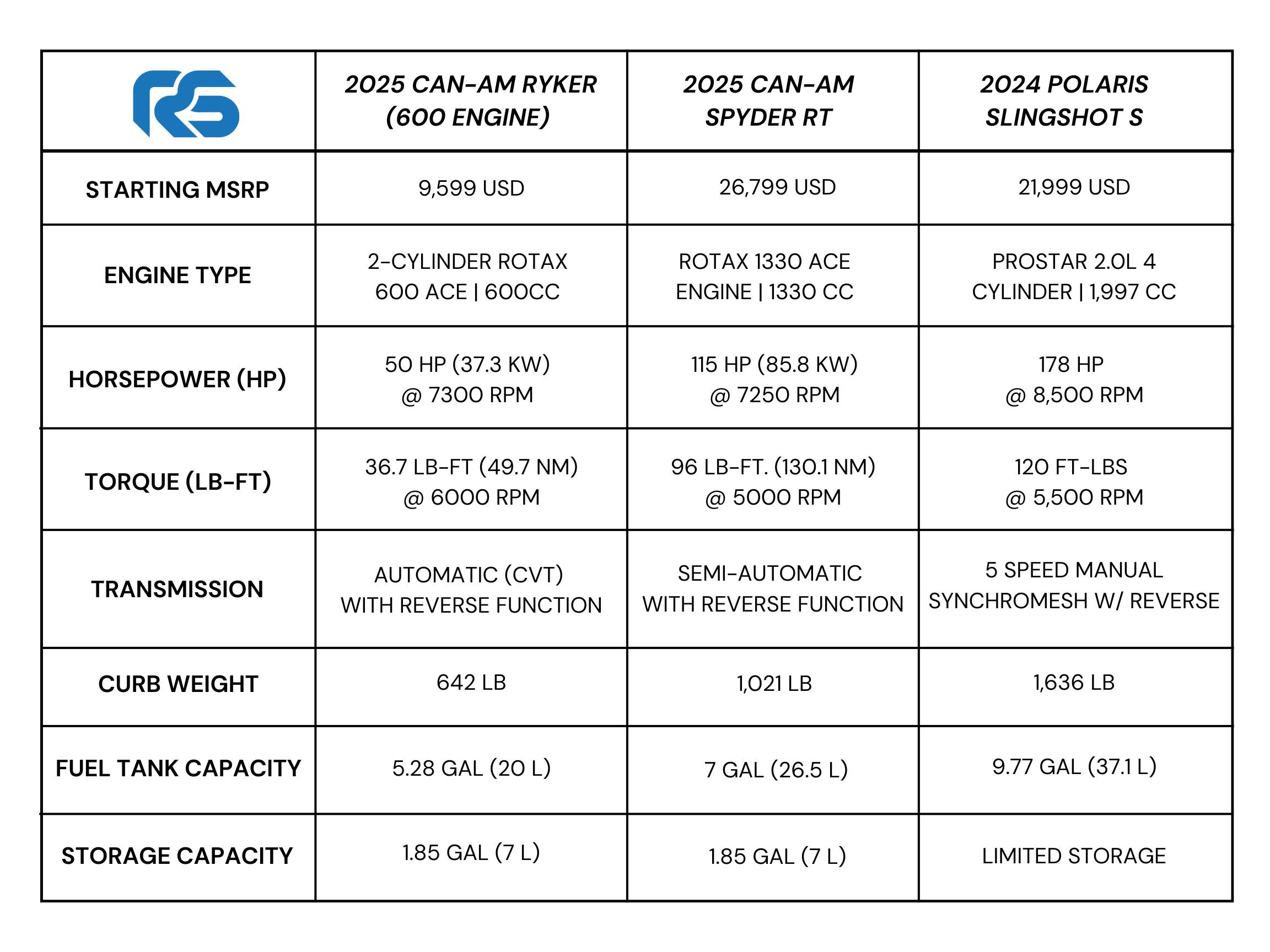
Starting MSRP
- 2025 Can-Am Ryker: $9,599
- 2025 Can-Am Spyder RT: $26,799
- 2024 Slingshot S: $21,999
Engine Type
- 2025 Can-Am Ryker: 2-cylinder Rotax 600 ACE | 600cc
- 2025 Can-Am Spyder RT: ROTAX 1330 ACE engine | 1330cc
- 2024 Slingshot S: Prostar 2.0L 4 Cylinder | 1,997cc
Horsepower (hp)
- 2025 Can-Am Ryker: 50 hp (37.3 kW) @ 7300 RPM
- 2025 Can-Am Spyder RT: 115 hp (85.8 kW) @ 7250 RPM
- 2024 Slingshot S: 178 hp @ 8500 RPM
Torque (lb-ft)
- 2025 Can-Am Ryker: 36.7 lb-ft (49.7 Nm) @ 6000 RPM
- 2025 Can-Am Spyder RT: 96 lb-ft. (130.1 Nm) @ 5000 RPM
- 2024 Slingshot S: 120 ft-lbs @ 5,500 RPM
Transmission
- 2025 Can-Am Ryker: Automatic (CVT) with reverse function
- 2025 Can-Am Spyder RT: Semi-automatic with reverse function
- 2024 Slingshot S: 5-Speed Manual Synchromesh with Reverse
Curb Weight
- 2025 Can-Am Ryker: 642 lb
- 2025 Can-Am Spyder RT: 1,021 lb
- 2024 Slingshot S: 1,636 lb
Fuel Tank Capacity
- 2025 Can-Am Ryker: 5.28 gal (20 L)
- 2025 Can-Am Spyder RT: 7 gal (26.5 L)
- 2024 Slingshot S: 9.77 gal (37.1 L)
Storage Capacity
- 2025 Can-Am Ryker: 1.85 gal (7 L)
- 2025 Can-Am Spyder RT: 1.85 gal (7 L)
- 2024 Slingshot S: Limited storage
Slingshot vs. Spyder
When comparing the Polaris Slingshot vs. Can-Am Spyder, the biggest difference comes down to their design and driving feel. The Slingshot has a two-front, one-rear wheel setup and a low, car-like cockpit, giving it a sporty edge. The Can-Am Spyder, with two front wheels and one rear wheel, is focused more on stability and comfort, especially for longer trips. The Spyder also offers more storage space and features tailored for touring, while the Slingshot emphasizes performance and a minimalist design.
Slingshot vs. Ryker
The Slingshot vs. Can-Am Ryker comparison highlights differences in simplicity and power. The Ryker is a lightweight option with a twist-and-go automatic transmission and smaller engine sizes (600cc and 900cc), making it easy to operate. The Slingshot, on the other hand, provides more horsepower and comes with both manual and automatic transmission options. While the Ryker is known for its affordability and flexibility, the Slingshot focuses on delivering higher performance and a bold design.
Pros vs. Cons of All Three
The Can-Am Ryker, Can-Am Spyder, and Polaris Slingshot each bring something different to the table, but they also have their drawbacks. From budget-friendly designs to touring-ready features and sporty performance, there’s a lot to consider when weighing the pros and cons of each. Below, we’ve broken down the key points for all three to give you a clearer picture.
Pros of the Can-Am Ryker:
- Attracts new and budget-conscious riders.
- Offers an exposed, dynamic ride with handlebar steering.
- Ideal for short to medium-range rides in urban settings.
Cons of the Can-Am Ryker:
- Performance isn’t the best, comparatively speaking on wet or less-than-perfect roads.
- Not as comfortable as the Spyder or Slingshot for extended periods.
- Rotox engine is known to be not as reliable.
Pros of the Can-Am Spyder:
- Excellent for long rides with a comfortable seating posture.
- Generally better fuel economy than the Polaris Slingshot.
- Comes with advanced technological and comfort features, ideal for touring.
Cons of the Can-Am Spyder:
- Reported battery/connection issues
- Wider, which may be more challenging depending on what you’re using it for.
- Rotox engine is known to be not as reliable.
Pros of the Polaris Slingshot:
- High-revving four-cylinder engine provides a sporty experience.
- Equipped with a steering wheel and pedals for an intuitive car-like driving experience.
- Agile and responsive, particularly in tight corners.
- Only need a standard driver’s license in most states to drive.
Cons of the Polaris Slingshot:
- Known to have not-so-great fuel mileage.
- More expensive to maintain.
- Size of a car, which may be inconvenient if you’re used to navigating smaller spaces with a bike.
Here's a Quick Breakdown to Help You Choose
- For budget-conscious riders: Choose the Can-Am Ryker.
- For touring comfort: Choose the Can-Am Spyder.
- For raw power and performance: Choose the Polaris Slingshot.
Ultimately, the best choice depends on your individual preferences and budget. Take both machines for a test ride to see which one you like better!
Additional Factors to Consider
Choosing between the Can-Am Ryker, Can-Am Spyder, and Polaris Slingshot goes beyond just budget or performance. Here are a few other things to keep in mind when deciding which one is right for you:
- Your riding experience
- Your passenger needs
- Your customization desires
Your riding experience: If you’re new to riding, the Ryker or Slingshot might be a good starting point. Thanks to their automatic transmission options, both are straightforward to handle, making them easier to learn on compared to manual options.
Your passenger needs: If you plan on riding with a passenger often, the Spyder is worth considering. It offers more space and comfort for two people, especially on longer rides, making it the most passenger-friendly option of the three.
Your customization desires: All three models come with a range of accessories and customization options, so you can tailor the vehicle to suit your style and needs. From storage solutions to aesthetic upgrades, there’s no shortage of ways to make any of these machines truly yours.
Three-Wheeled Motorcycle Rentals
At Riders Share, we’re proud to be the largest motorcycle rental marketplace, connecting riders with the three-wheeled motorcycle rentals they’ve been wanting to try. Our platform makes it easy to rent popular models like the Can-Am Ryker, Can-Am Spyder, and Polaris Slingshot from trusted owners. While we don’t currently offer ATV rentals, they’ll be coming soon—so keep an eye out for updates as we expand our lineup.
Can-Am Rentals
If you’re searching for Can-Am rentals, Riders Share is the place to find them. From the lightweight Ryker to the touring-ready Spyder, we provide access to a variety of Can-Am models through a secure and reliable rental process. Renting through Riders Share means you can try these three-wheeled motorcycles without the long-term commitment of ownership. Plus, while ATVs aren’t part of our listings just yet, we’re working hard to bring them into the fold soon.
Slingshot Rentals
Interested in Slingshot rentals? Riders Share offers Polaris Slingshot models for drivers looking to try something different. With options ranging from the S to the R, our platform connects you with Slingshots for everything from quick outings to extended adventures. Renting through Riders Share is simple and easy, and it’s a great way to see if a Slingshot is right for you. For more information, check out our Polaris buyer’s and renter’s guide and learn how to get started today.
Related Articles
Mon - Fri: 8-8 CT
Weekends: 9-8 CT
