Motorcycle Protective Gear Guide 2026: Helmets, Jackets, Gloves & Safety Equipment
Feb 20, 2026
Tags:preparerentersownersguide
In 2023, 6,335 motorcyclists were killed on U.S. roads, the highest annual total NHTSA has recorded since it started tracking in 1975. Per mile traveled, riders were roughly 28 times more likely to die in a crash than someone in a passenger car, and that gap hasn't been closing. The difference between walking away from a crash and not often comes down to what you're wearing. Knowing what motorcycle protective gear to prioritize (and what you can hold off on) is one of the most useful things you can learn as a rider.
What Are the 4 Main Items of Motorcycle Protective Clothing?
The four main items of motorcycle protective clothing are a helmet, riding jacket, gloves, and boots. These cover the highest-impact areas in a crash and should be on every ride regardless of distance or experience. Riding pants, eye protection, hearing protection, and body armor build out from that foundation depending on how and where you ride.
Is Motorcycle Gear Really Necessary?
A motorcycle doesn't come with seatbelts, airbags, crumple zones, or an enclosed cabin, so your motorcycle safety gear is the only protection between you and the pavement. Here's what the crash data consistently shows about how much that protection matters:
- Motorcycle helmets reduce the risk of death by approximately 37% for riders and 41% for passengers (National Safety Council)
- Brain injuries drop by roughly 67% with helmet use (NHTSA)
- Riders without helmets are 3x more likely to suffer traumatic brain injuries (NHTSA)
- Over 22,000 motorcyclists are estimated to have died between 1976 and 2022 as a result of weaker helmet laws across states (IIHS)
Those numbers hold true even at lower speeds, where a fall without proper gear can still lead to road rash, broken bones, and head injuries that change everything.
What Is the Most Important Piece of Motorcycle Gear?
A DOT or SNELL certified helmet is the single most important piece of motorcycle safety gear you can own. NHTSA and IIHS data shows a 37% reduction in rider deaths and a 67% reduction in brain injuries with helmet use, and nothing else you wear comes close to those numbers.
Motorcycle Helmet Guide
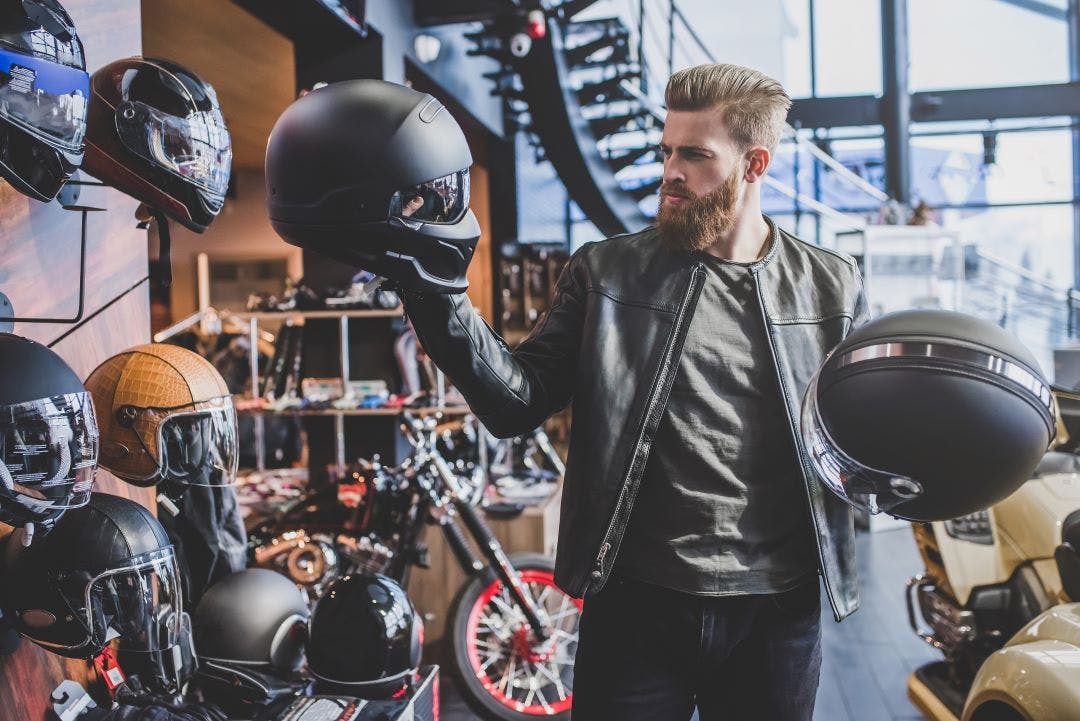
The biggest factor separating a $100 helmet from a $700 one is the safety certification, which tells you what level of impact testing the helmet has passed.
- DOT (Department of Transportation): The federally required minimum for any helmet sold in the U.S., indicated by a sticker on the outside back.
- SNELL: A more rigorous impact testing standard from the Snell Memorial Foundation that goes beyond DOT. Worth the upgrade if your budget allows it.
- ECE 22.06: The latest European standard, widely respected and increasingly common on premium models from Shoei and AGV.
Which Helmet Type Fits Your Riding Style
- Full Face: Maximum protection across your head, chin, and face. The go-to for street riding at all experience levels and the style most safety organizations recommend. $150 to $700+ from Shoei, Arai, Bell, and HJC.
- Modular: A flip-up chin bar for talking, hydrating, or cooling off without removing the helmet. Popular for touring and commuting, though the hinge adds slight weight and a potential weak point compared to a one-piece shell. $200 to $600.
- Open Face: More airflow and a wider field of view, but you're giving up chin and face protection, and the chin area accounts for a significant percentage of helmet impacts in crashes. Popular among cruiser riders. $100 to $400.
- Half Helmet: Meets the minimum DOT requirement with the least overall coverage. The chin and face are completely exposed, which is a huge gap in protection.
When to Replace Your Motorcycle Helmet
You should replace your motorcycle helmet every 3-5 years from the manufacture date, even if it still looks fine on the outside. The EPS foam liner that absorbs impact energy degrades from UV, sweat, and aging, so an older helmet won't protect you the way it did when it was new. Replace immediately after any crash impact or hard drop, since the internal structure may be compromised in ways you can't see.
Riding Jackets
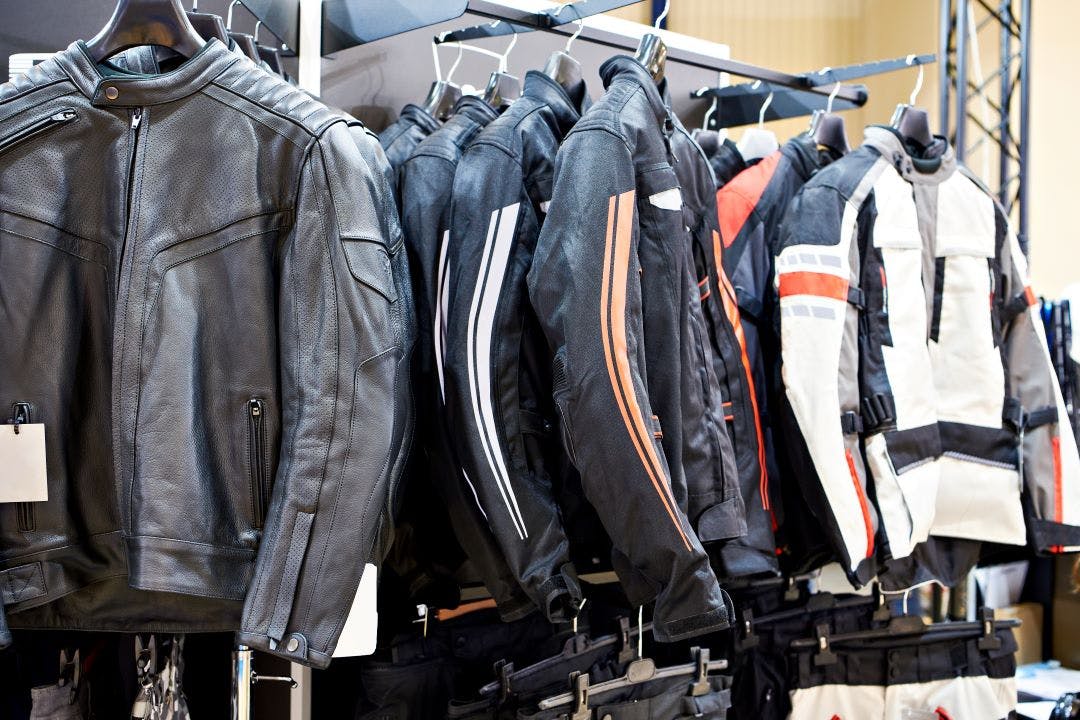
A good riding jacket does two things at once: it resists abrasion if you slide across pavement, and it absorbs impact energy through CE rated armor at the shoulders, elbows, and back. The material you choose comes down to how and when you ride.
- Leather offers the best abrasion resistance of any jacket material and holds up well over years of use. The trade-off is that it runs warm in summer and costs more up front. $250 to $800+ from Alpinestars, Dainese, and REV'IT.
- Textile (Cordura, Kevlar blends) offers strong protection with better ventilation and weather versatility. Many come with removable thermal liners and waterproof membranes for year-round use. $150 to $500+.
Whichever you go with, armor should sit directly over your joints and stay in place when you move. If your jacket doesn't include a back protector (most entry-level options skip it), adding a standalone insert for $40 to $80 is worth it since your spine is one of the most critical areas to protect.
Motorcycle Gloves
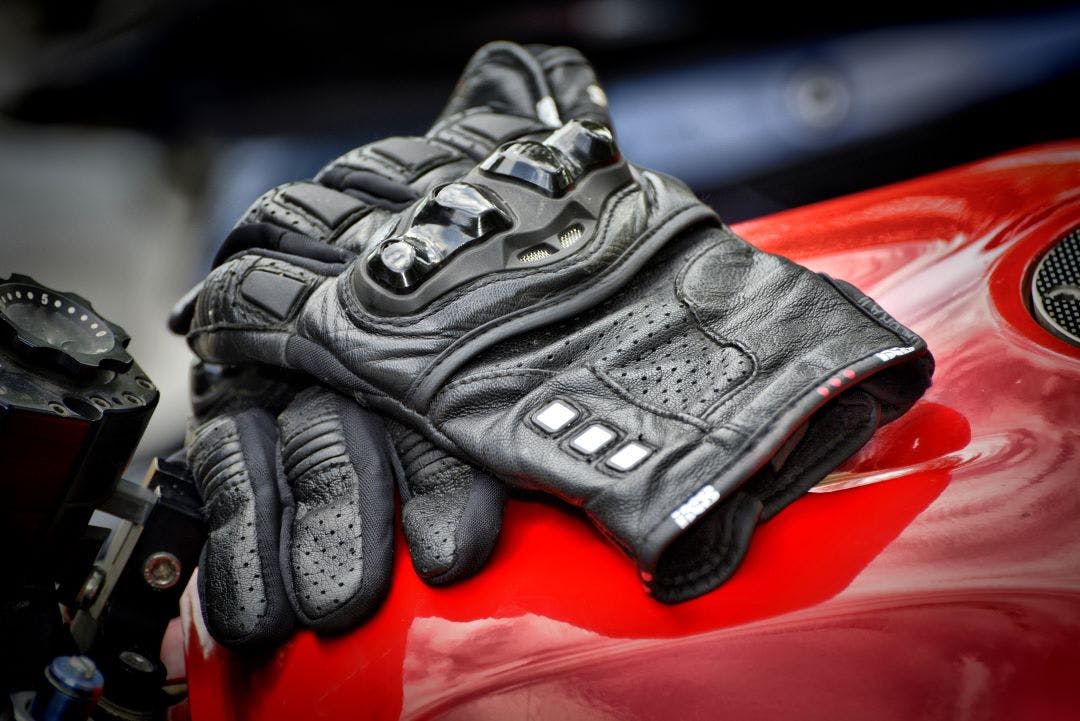
Your hands are one of the first things to hit the ground when you fall, and even a short slide without gloves can shred your palms and knuckles down to the bone. A good pair puts CE rated armor and abrasion-resistant material over those areas while still giving you enough flexibility to operate your controls.
- CE rated knuckle protection absorbs impact from hard contact with the ground
- Reinforced palms (leather is strongest) handle abrasion during slides
- Secure wrist closure keeps the glove from pulling off in a crash
- Enough flexibility to work your clutch, brake, and throttle without fighting the material
- Touchscreen-compatible fingertips are a nice convenience for checking GPS without pulling over
What you spend depends on when you ride: summer ventilated gloves run $50 to $100, all-season mid-weight options sit at $80 to $150, and insulated waterproof gauntlets cost $100 to $200. If you ride year-round, owning a warm-weather pair and a cold/wet pair is one of the better upgrades you can make.
Motorcycle Pants
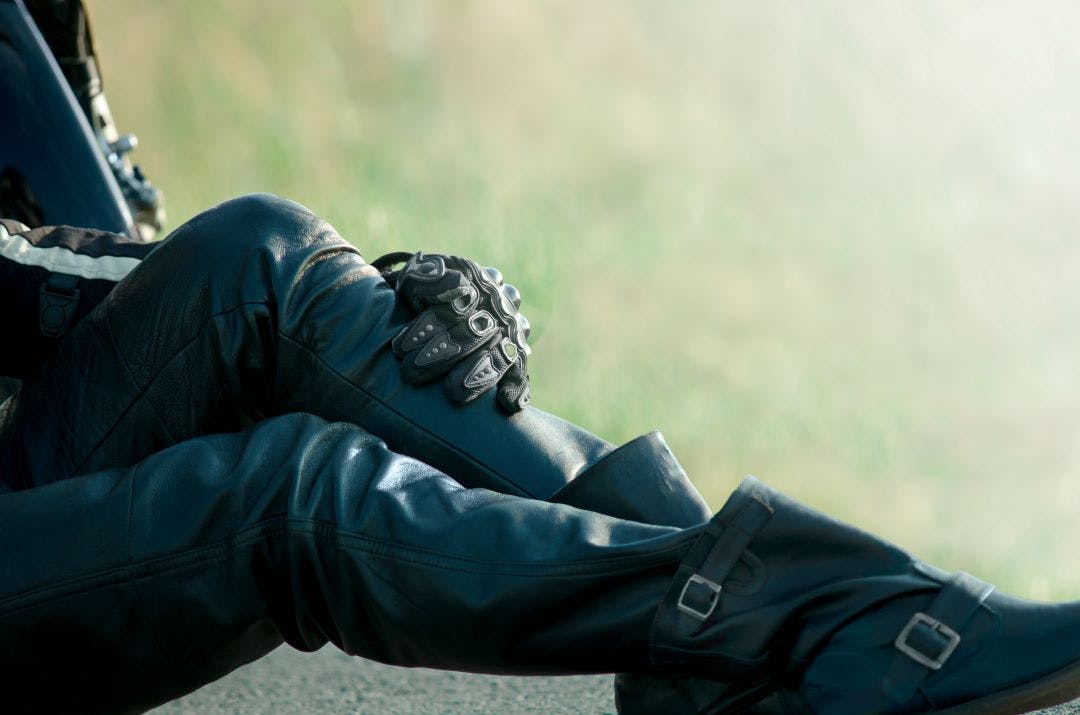
Regular jeans offer almost no protection in a crash, and that's a reality a lot of riders don't think about until it's too late. Motorcycle pants are built with abrasion-resistant materials and include armor at the knees and hips, two of the most common impact zones during a slide.
- Kevlar Lined Riding Jeans: Protection that looks like normal jeans off the bike. Reinforced panels with removable knee and hip armor. Bull-it, Klim, and REV'IT all make strong options. $100 to $250.
- Textile Riding Pants: Full armor and weatherproofing for commuting and touring. $100 to $300.
- Leather Riding Pants: Maximum abrasion resistance for sport and track riding, often designed to zip into a matching jacket. $200 to $400+.
Motorcycle Boots
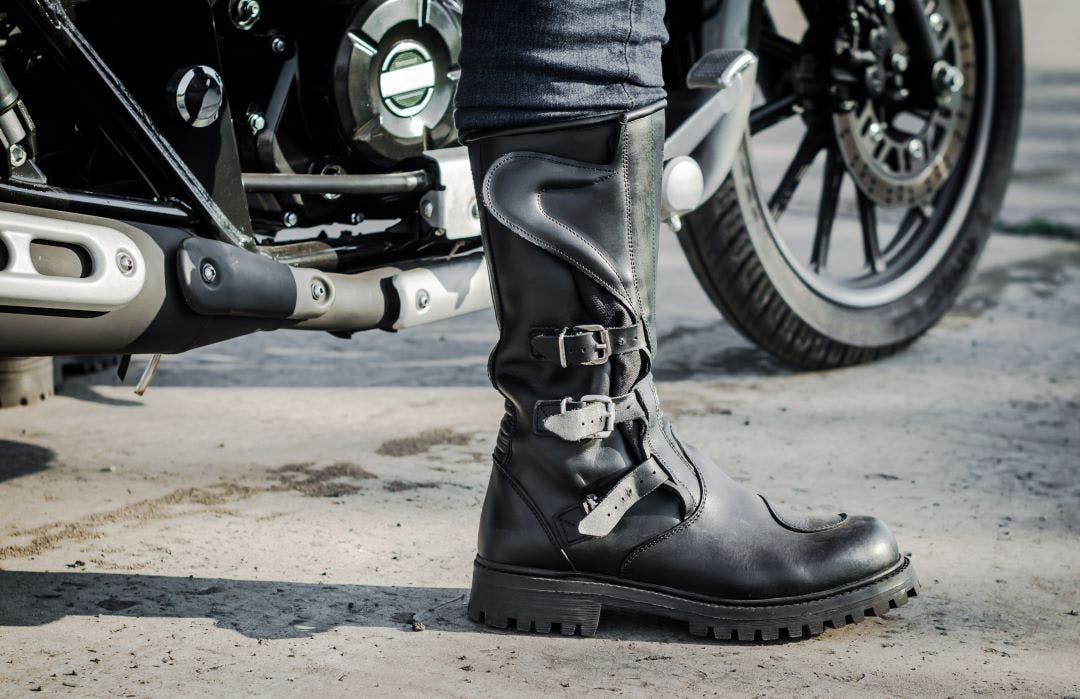
Your feet and ankles are vulnerable even in low-speed tip-overs, and ankle fractures are one of the most common motorcycle crash injuries that proper boots can prevent. Riding boots include shift pad reinforcement on the left foot (where your shift lever contacts), oil-resistant soles that grip pegs without slipping, and structural ankle support that regular footwear can't match. In a crash, a regular boot can twist, compress, or pull off entirely, while a riding boot holds its shape and protects the joint.
- Entry Level (Street/Casual): Reinforced toe and heel with basic ankle support. Great for commuting and everyday riding. $80 to $150.
- Touring/Adventure: Waterproof, long-ride comfort, and substantial ankle protection for riders covering serious miles. $200 to $400.
- Sport/Track: Race-level torsion control, replaceable toe sliders, and rigid bracing for aggressive riding. $300 to $600.
Eye and Hearing Protection
If your helmet doesn't have a visor, eye protection is legally required in most states, and even where it's not, riding without it exposes your eyes to wind, dust, road debris, and UV damage for the entire ride. Riding goggles or ANSI rated sunglasses run $20 to $80 and are worth having even as a backup.
Hearing protection is one of the most overlooked pieces of motorcycle safety gear, especially among newer riders. Wind noise at highway speeds can exceed 100 decibels, well above the threshold for permanent damage over time. Foam earplugs cost a few dollars and make a real difference on longer rides, and custom-molded motorcycle earplugs ($50 to $200) reduce wind noise while still letting you hear traffic and your engine.
Reflective Gear and Additional Body Armor
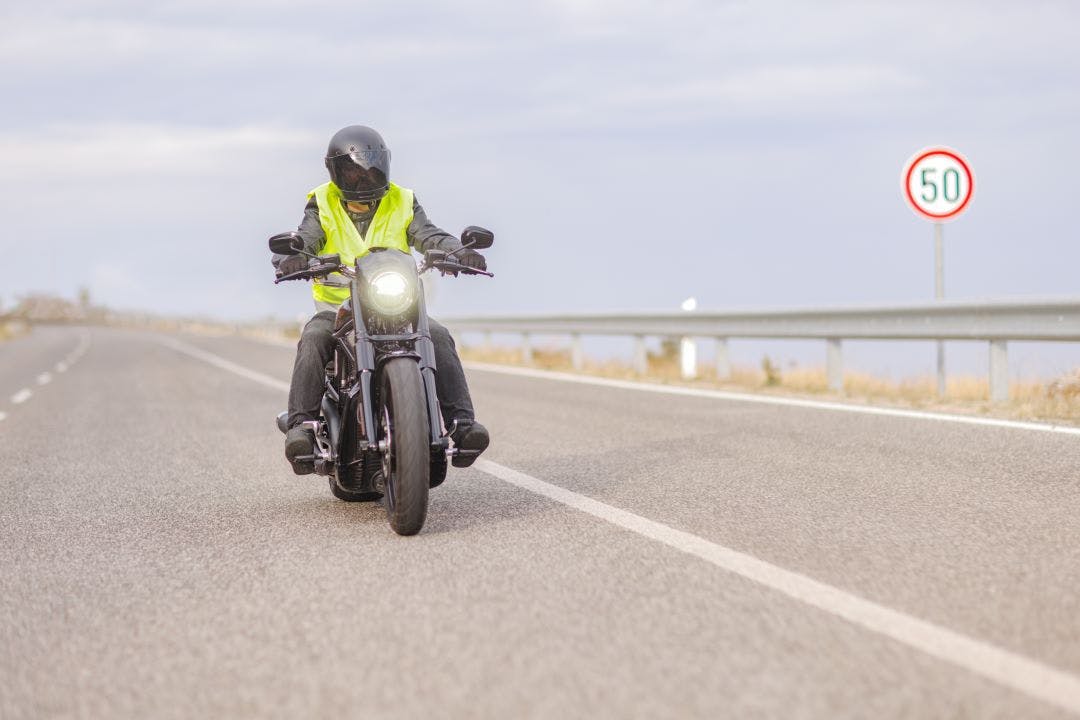
A reflective vest ($15 to $40) goes over any jacket and noticeably improves your visibility to other drivers, especially when commuting or riding at night. For riders who want coverage beyond the four essentials:
- Back Protectors: Standalone spine protection as jacket inserts or separate wearable pieces
- Chest Protectors: Frontal impact protection, popular with adventure and off-road riders
- Knee/Elbow Guards: Add-on armor for gear without built-in protection
- Hip Protectors: Extra pelvis cushioning inside riding pants
- Neck Braces: Common in off-road and track to limit neck movement
- Kidney Belts: Lower back support for long rides
How Much Should I Spend on Motorcycle Gear?
Your total spend depends on experience level, riding frequency, and riding style. Here's what each tier gets you in 2026.
Budget Tier ($500 to $800)
The essentials for new or occasional riders with reliable protection from reputable brands. This is the minimum we'd recommend for any rider.
- DOT certified full-face helmet: $100 to $200
- Textile jacket with CE armor: $150 to $250
- Basic riding gloves: $40 to $80
- Entry-level boots: $80 to $150
- Kevlar riding jeans: $100 to $150
Mid-Range Tier ($800 to $1,500)
This is where most regular riders end up, and it's where you start to see better materials, improved comfort, and more versatility across different conditions.
- SNELL certified helmet: $250 to $450
- Leather or premium textile jacket: $250 to $500
- Gauntlet-style gloves: $80 to $150
- Waterproof touring boots: $200 to $350
- Armored riding pants: $150 to $300
- Room for earplugs, a reflective vest, or a back protector
Premium Tier ($1,500+)
For riders who log serious miles or want the highest protection and technology available.
- Carbon fiber composite helmet: $500 to $800
- Race or touring-grade jacket (Dainese, Klim, Alpinestars): $500 to $1,000+
- CE Level 2 gloves: $150 to $300
- Gore-Tex boots: $300 to $600
- Race-spec pants: $300 to $600
- Airbag vest or electronic safety systems
A $200 jacket you actually wear every morning protects you better than a $1,000 jacket that stays home because it's too heavy or too stiff.
Best Motorcycle Gear Brands by Category
- Helmets: Shoei, Arai, Bell, HJC, Scorpion, AGV
- Jackets: Alpinestars, Dainese, REV'IT, Klim, Icon
- Gloves: Alpinestars, Dainese, REV'IT, Held, Racer
- Boots: Alpinestars, TCX, Sidi, Dainese, Forma
- Pants: REV'IT, Klim, Bull-it, Dainese, Alpinestars
- Back Protectors: Alpinestars, Dainese, Forcefield, D3O
What to Buy First if You're on a Budget
If you can't afford everything at once, here's the order that gives you the most protection per dollar.
- Helmet first, always. A $150 DOT certified full-face from HJC or Bell covers the area where injuries are most likely to be fatal.
- Gloves second. Your hands hit the ground first in most falls. $50 to $80 for knuckle armor and reinforced palms.
- Jacket third. A $150 to $200 textile jacket with CE armor prevents road rash across your torso, back, shoulders, and elbows.
- Boots fourth. Entry-level riding boots start around $80 and protect against common ankle injuries.
- Pants last. Not because they don't matter, but because the four items above cover higher-priority impact zones. Kevlar jeans start at $100.
Motorcycle Gear Checklist by Experience Level
What you need at 0 to 2 years of riding experience will look different than at 3 to 5 years, and it changes again once you’ve been riding for 5+ years. Here’s a clear, experience-based checklist so you can see what to prioritize at every stage.
Beginner Essentials
- DOT certified full-face helmet
- Textile jacket with CE rated shoulder, elbow, and back armor
- Riding gloves with knuckle protection and reinforced palms
- Over-the-ankle boots with toe and heel reinforcement
- Kevlar riding jeans or entry-level riding pants
- Foam earplugs
Intermediate Upgrades
- SNELL or ECE 22.06 certified helmet
- Leather or premium textile jacket with removable thermal liner
- Season-specific gloves (summer and winter pairs)
- Waterproof touring or adventure boots
- Fully armored riding pants
- CE Level 2 back protector insert
- Reflective vest or jacket with reflective panels
Advanced Rider Options
- Carbon fiber helmet with integrated communication system
- Airbag vest or jacket
- Race suit for track days
- Custom-molded earplugs with filtered attenuation
- Race-grade boots with torsion control
- CE Level 2 chest protector
- Neck brace for off-road or track
Comfort, Fit, and Gear Care
Armor should sit directly over your joints and stay in place when you move. Try gear on in a riding position if you can, since a jacket that feels perfect standing up can feel different when you're leaned forward on a sportbike. If you're between sizes, sizing down for a snug fit that breaks in tends to work better than sizing up and dealing with loose armor.
Protecting Your Hair While Riding
- Breathable helmet liners prevent tangles and keep interior padding cleaner
- Silk or satin scarves reduce friction against the liner, especially for natural and textured hair
- Braids or low ponytails with gentle ties minimize wind tangles
- Ponytail-compatible helmets from Scorpion and LS2 offer extra space at the back
Keeping Your Gear in Good Shape
- Inspect for frayed stitching, compressed armor, worn soles, and visor scratches
- Clean helmet padding and visor per manufacturer instructions (most liners are machine washable)
- Condition leather occasionally to prevent cracking
- Store away from direct sunlight, since UV degrades protective materials
- Replace your helmet every 3 to 5 years, or immediately after any impact
Ready to Ride? Browse Motorcycle Rentals (with Gear Add-On)
If you’re not ready to buy all your own gear yet, we make it easy to get on the road anyway. As the largest peer-to-peer motorcycle rental marketplace in the country, we offer thousands of motorcycle rentals across all 50 states, and many of them come with helmet, jacket, or glove add-ons. When you’re browsing on Riders Share, just use the gear filter or check the listing for available gear options. Start your search, select your gear, and book your ride today.

The Bottom Line
Your motorcycle protective gear is the one investment that pays for itself the moment something goes wrong. A certified helmet, an armored jacket, riding gloves, and proper boots cover the areas that matter most, and building from there with pants, hearing and eye protection, and visibility gear only strengthens that foundation. The brands, materials, and pricing will keep evolving, but the core of it stays the same: protect your head first, cover the high-impact zones, buy the best you can afford, and wear it every ride.
Related Articles
Mon - Fri: 8-8 CT
Weekends: 9-8 CT
