Find Yourself Stuck? Here's How to Jump Start a Motorcycle
Jul 9, 2025
Tags:guidetutorialjump-startbattery
You turn the key, press the starter, and wait for the engine to kick in...but nothing happens. At first, you think maybe you didn’t hit the button right, so you try again. Still nothing. That’s when it starts to hit you: your battery’s probably dead, and now you’re stuck with a bike that won’t turn over. It’s frustrating, especially if you were about to head out or already running late, and now you’ve got to figure out what to do next.
If you're wondering how to jump start a dead motorcycle battery, you're in the right place. In this blog, we’ll walk you through the steps, talk about what you’ll need, and explain how to do it safely so you can get back on the road without causing any damage.
Why Won’t My Motorcycle Start?
Sometimes a motorcycle won’t start, and it’s not always clear why right away. It could be something simple like a dead battery, or it might be a sign that something else needs attention. If you hit the starter and nothing happens, or maybe you hear a clicking sound but the engine won’t turn over, the most common culprit is the battery. Batteries can drain if your bike’s been sitting too long, if you accidentally left the key in the “on” position, or if it’s just an old battery that’s losing its charge.
While a dead battery is usually the most common answer, that doesn’t mean it’s always the right answer. Sometimes it’s a loose connection, a blown fuse, or even something as basic as the kill switch being flipped without you realizing it. It’s also worth checking that your kickstand is up and the bike’s in neutral, especially if it has a safety feature that prevents it from starting otherwise.
If everything looks fine but it’s still not starting, it might be time to jump it and see if that gets things moving. Once you get it running again, you’ll have a better sense of whether it was just a drained battery or if something else needs to be checked out.
Is it Safe to Jump Start a Dead Motorcycle Battery?
Yes, jump starting a dead motorcycle battery is generally safe, as long as you do it the right way and know what you’re working with. Most of the time, a jump start is all you need to get going again, especially if the battery just drained from sitting too long. That said, not every situation calls for it. If the battery is badly damaged or leaking, or if you’re unsure where the issue is coming from, jumping it might do more harm than good.
Can You Jump Start a Motorcycle With a Car?
Yes, you can jump start a motorcycle with a car, but you do need to be a little careful. Car batteries are stronger than motorcycle batteries, so you don’t want to risk overpowering anything. The most important thing to remember is to keep the car turned off while you're connecting the cables and starting your bike, since you’re just borrowing a charge from the battery, not running power from the car itself. As long as both batteries are 12 volts and the connections are solid, this method usually works. Just make sure you follow the same steps you would with any other jump start, and take your time with the setup.
What You’ll Need to Jump Start a Motorcycle
You don’t want to be halfway through jumping your motorcycle’s battery and realize you’re missing something important. The good news is, you don’t need a full tool kit, just a few basics. You’ll have two main options here: you can use jumper cables connected to another battery (like from another bike or a car), or go with a portable jump starter, which is often the easier and safer choice, especially if you’re on your own. Both work, so it really comes down to what you have access to. Here’s a quick checklist to help you get ready:
☐ Jumper cables or a portable jump starter
☐ Access to a second battery (if using jumper cables)
☐ Gloves (optional, but helpful)
☐ A clear, stable surface to work on
☐ Basic understanding of where your battery is and how to access it
How to Jump Start a Motorcycle With Jumper Cables
If you’ve got access to another bike or even a car with a 12V battery, you can use jumper cables to get your motorcycle started. This method works just fine as long as you're careful and take your time. Here’s how to do it:
Step 1: Turn off both vehicles. Make sure the bike with the dead battery and the vehicle you're using to jump it are both completely off. This helps you avoid any electrical issues right from the start.
Step 2: Locate the batteries. Find the battery on your motorcycle and on the other vehicle. If they’re covered, you’ll need to remove the seat or side panel to get to them.
Step 3: Connect the positive cable. Take the red (positive) clamp and connect it to the positive terminal on the dead battery first. Then, connect the other end of the red cable to the positive terminal on the working battery.
Step 4: Connect the negative cable. Next, grab the black (negative) clamp and connect it to the negative terminal on the working battery. Then, connect the other end to a metal part of your bike’s frame—not directly to the dead battery. This helps prevent sparks.
Step 5: Start the working vehicle. Turn on the car or motorcycle with the good battery and let it run for a minute or so. This gives your dead battery a little boost.
Step 6: Try starting your bike. Now, try to start your motorcycle. If it turns over, let it run for a bit so the battery can keep charging. If it doesn’t start right away, wait another minute and try again.
Step 7: Disconnect the cables. Once your bike is running, remove the cables in the reverse order you put them on. So start with the black cable from your bike, then the black cable from the other battery, then both reds.
How to Jump Start a Motorcycle With a Portable Battery Pack
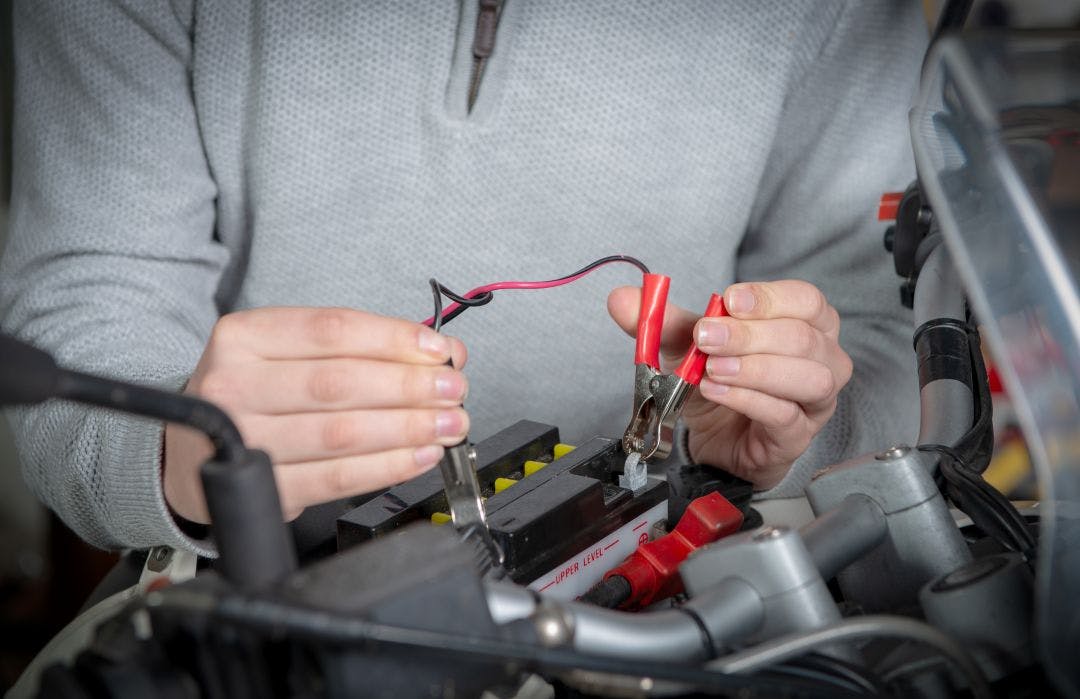
If you don’t have another vehicle nearby, a portable jump starter is a great option. It’s compact, easy to use, and doesn’t rely on anyone else being around to help. Here's how to use one the right way:
Step 1: Make sure the jump starter is fully charged. Before anything else, check that your portable battery pack has enough charge. If it’s low, it might not be strong enough to start your bike.
Step 2: Turn everything off. Your bike should be completely off before you connect the jump starter. This helps prevent electrical surges and makes the process safer.
Step 3: Connect the positive clamp. Attach the red clamp to the positive terminal on your bike’s battery.
Step 4: Connect the negative clamp. Attach the black clamp to a solid piece of metal on the frame of your bike. Avoid placing it directly on the battery’s negative terminal if possible.
Step 5: Power on the jump starter. Turn on the portable jump starter according to its instructions. Some have a switch or button you need to press to activate it.
Step 6: Start your bike. Try starting your motorcycle. If it fires up, let it run for a few minutes. This helps the battery get a bit of charge before you head out.
Step 7: Disconnect everything. Turn off the jump starter and remove the clamps, starting with the black one first. Then take off the red clamp and stow the battery pack away.
How to Avoid Getting Stuck Again
- Keep your battery charged
- Ride your bike regularly
- Turn everything off when parked
- Check the battery connections
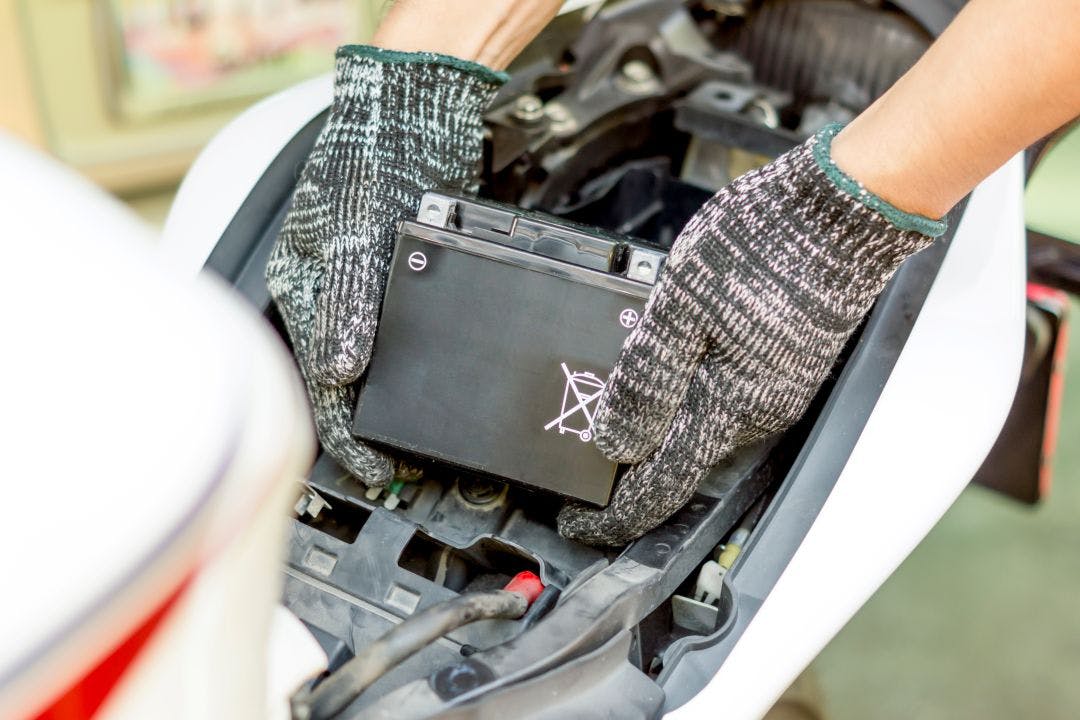
- Replace old batteries before they die
The best way to avoid dealing with a dead battery is to stay ahead of it. If your bike isn’t getting much use, a trickle charger, which is a small device that slowly feeds just enough power to the battery to keep it from draining while your bike sits, can help keep the battery in good shape. It’s also worth giving the cables and terminals a quick look every so often to make sure nothing’s loose or corroded. And if your battery’s already a few years old and starting to act up, swapping it out before it quits completely can save you a lot of frustration.
Renting a Motorcycle? Here’s What to Do If It Won’t Start
Running into a dead battery during a rental can be frustrating, but it’s not the end of the road. If the bike won’t start, take a second to check the usual things: make sure the kill switch is off, the bike’s in neutral, and the kickstand is up. If everything looks good and it still won’t turn over, let the owner know through the Riders Share platform. Communication is built right into your rental, so it’s easy to get in touch and figure out the next step.
When you rent through Riders Share, you’re connected directly with the bike’s owner. They’ll usually be the first person to help troubleshoot or offer a solution if something goes wrong. And since rentals are available across the country, you’re never limited to one shop or location. If you're planning to rent again in the future, it’s good to know there’s a wide selection of bikes available in every city all over the U.S.—with support when you need it.

Related Articles
Mon - Fri: 8-8 CT
Weekends: 9-8 CT
