7 Ways to Experience Miami Like a Local on Two Wheels
Feb 12, 2026
Tags:guide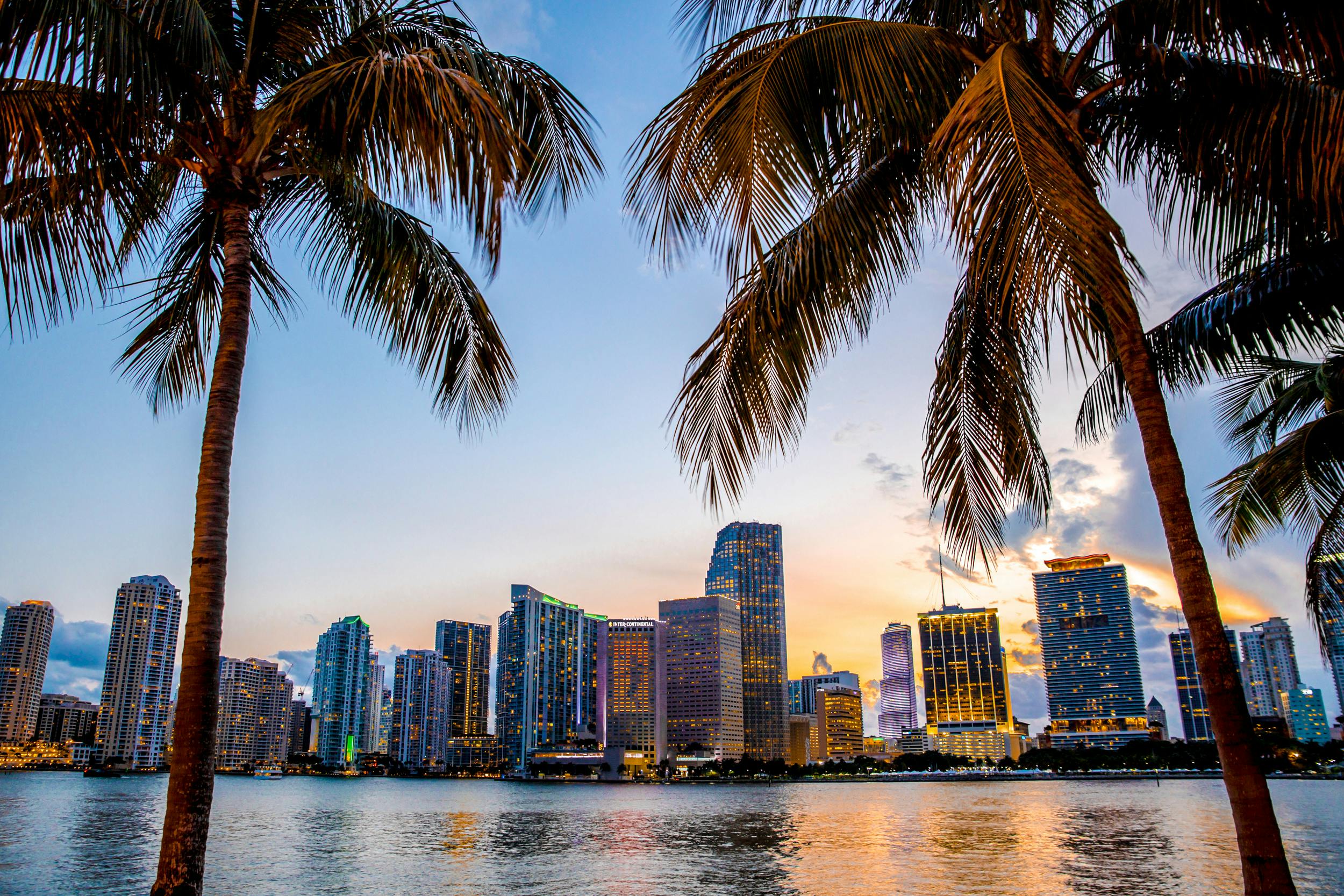
When most people visit Miami, they end up doing the same loop: South Beach, Ocean Drive, maybe a Wynwood Walls photo, and then back to the hotel. And those spots are fine, but they represent a pretty narrow view of a city that has a lot more going on than the tourist-facing version suggests. The actual Miami local experience is spread across neighborhoods that most visitors never reach, built around morning routines and backroads and the kind of food that exists because someone's family has been making it the same way for 50 years.
A 2025 YouGov survey found that 56% of Americans would rather spend time in lesser-known spots than fight crowds at the more popular locations. In Miami, a motorcycle is one of the better ways to find those spots, since the neighborhoods worth visiting don't sit next to each other, traffic is consistently bad, and most of the good stuff isn't on any organized tour.
So, what’s the best way to explore Miami if you want the version that locals actually live in? Here are seven experiences that go past the standard itinerary, and that all happen to be better on two wheels.
1. Catch a Sunrise in the Everglades on Route 41
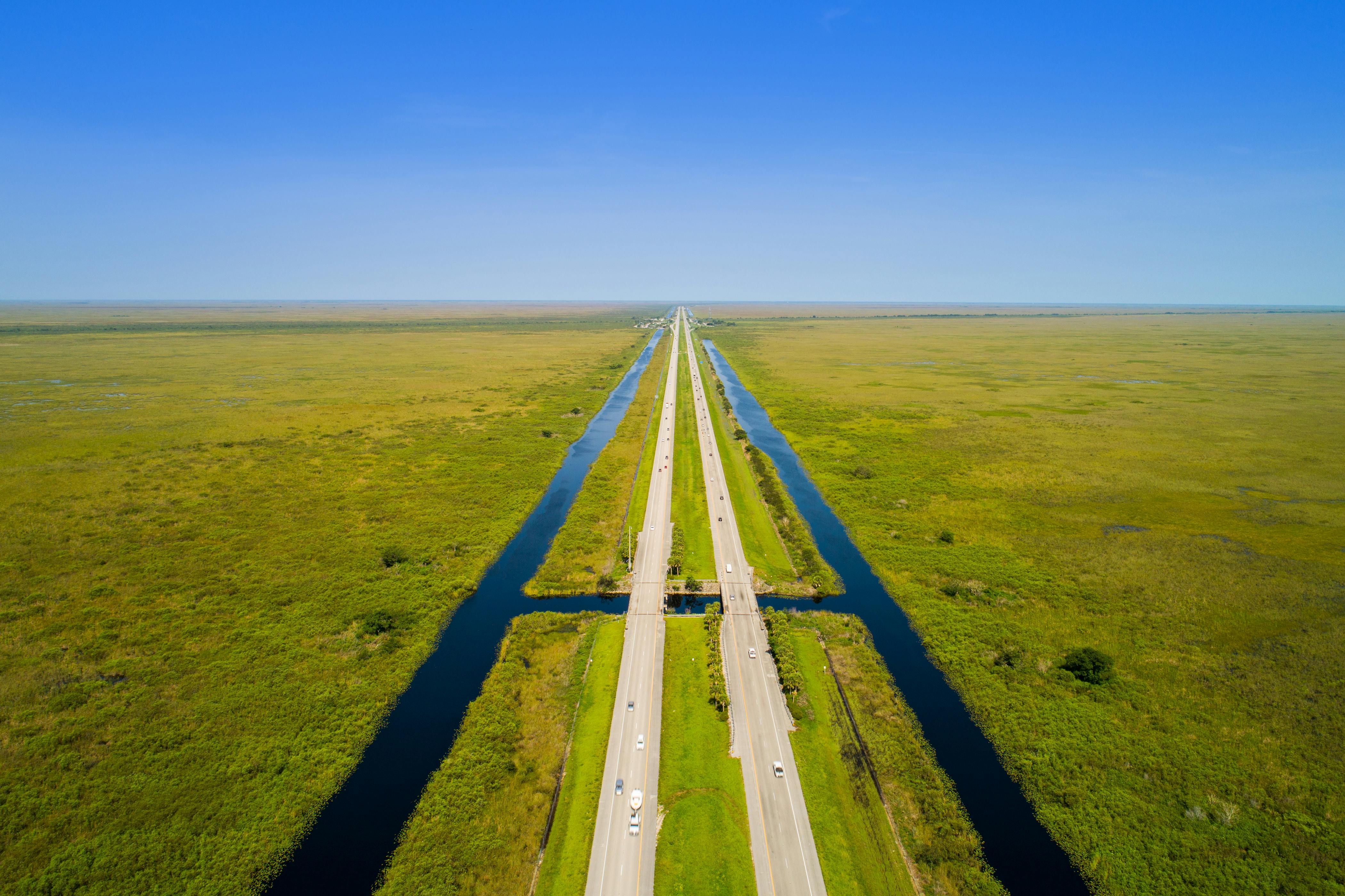
What do locals do in Miami when they want to get out of the city for a few hours? A lot of them head west. The Everglades is a 1.5-million-acre subtropical wilderness that starts just past Miami's western suburbs, one of only three UNESCO World Heritage Sites in Florida and home to over 360 species of birds, 300 species of fish, and 50 species of reptiles. Most visitors either skip it or show up mid-afternoon for an airboat tour, which means the early morning hours belong almost entirely to locals and wildlife.
The Route
US-41 (Tamiami Trail) runs west from Miami into Everglades National Park, covering about 40 miles to Shark Valley. This Everglades motorcycle route is at its best before 8 a.m., when alligators are out along the banks and wading birds are active in the marshes around Shark Valley. Start before 6:30 a.m. if you can, and bring water, because the heat builds fast after 9 and there's almost nothing out there once you pass the suburbs.
Where to Stop
- Shark Valley Visitor Center: A 15-mile loop trail with a 65-foot observation tower at the midpoint, offering some of the most reliable wildlife viewing in the park. You can walk it, bike it, or take a guided tram.
- Miccosukee Village: A cultural center operated by the Miccosukee Tribe of Indians of Florida, with handmade crafts, traditional food, and tribal-run airboat rides
- Coopertown Airboats: Family-run since 1945, making it one of the oldest airboat operations in the Everglades
2. Cruise Through Wynwood's Street Art Beyond the Walls
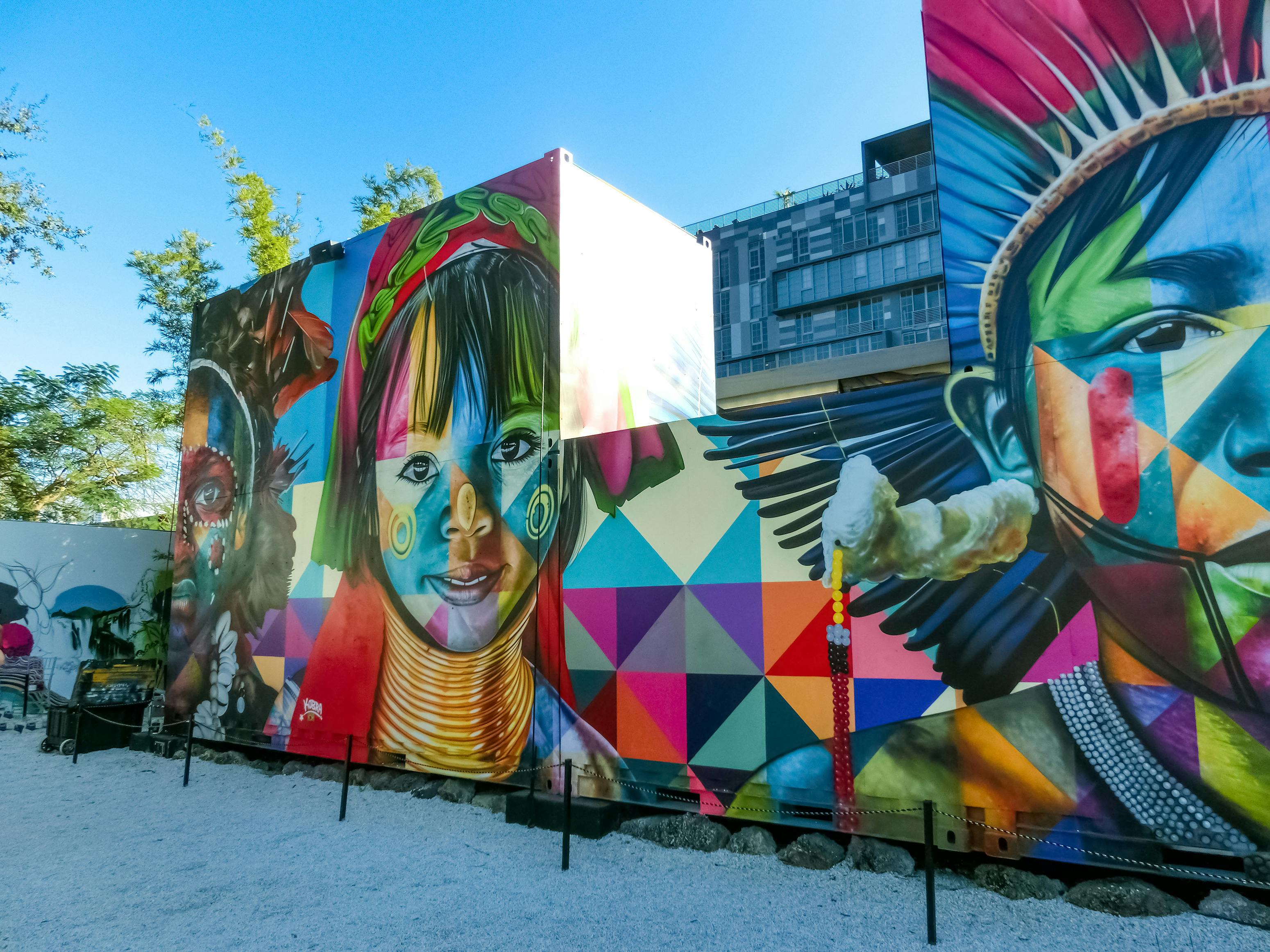
Wynwood covers roughly 50 blocks north of downtown Miami, and the neighborhood has turned into one of the largest open-air street art collections in the world. The Wynwood Walls get most of the foot traffic, but they only take up about a block and a half of a district that stretches from NW 20th to NW 29th Street. On a motorcycle, you can cover the full neighborhood and get into the side streets where some of the more interesting work is, without spending 20 minutes looking for a parking spot.
The Route
The core of the district runs between NW 20th and NW 29th Streets, from NW 2nd Avenue to NW 5th Avenue. The murals rotate as local and international artists cycle through, so what you see on a Wynwood motorcycle ride this month might be gone next month. Weekday mornings before 10 a.m. are the best window, since weekend foot traffic around the Walls picks up fast and parking (even for a motorcycle) gets tight by Saturday afternoon.
Where to Stop
- Museum of Graffiti: The first museum in the world dedicated to graffiti as an art form, with rotating exhibitions and a curated outdoor wall that changes seasonally
- Panther Coffee: A Miami-born roaster that's been in the neighborhood since before most of the galleries moved in. One of the original Wynwood gathering spots.
- La Fama: A Cuban restaurant that predates the art boom, still serving the same menu at the same prices while most of the neighborhood around it has turned over.
3. Ride Through Little Havana for Cafecito and Culture
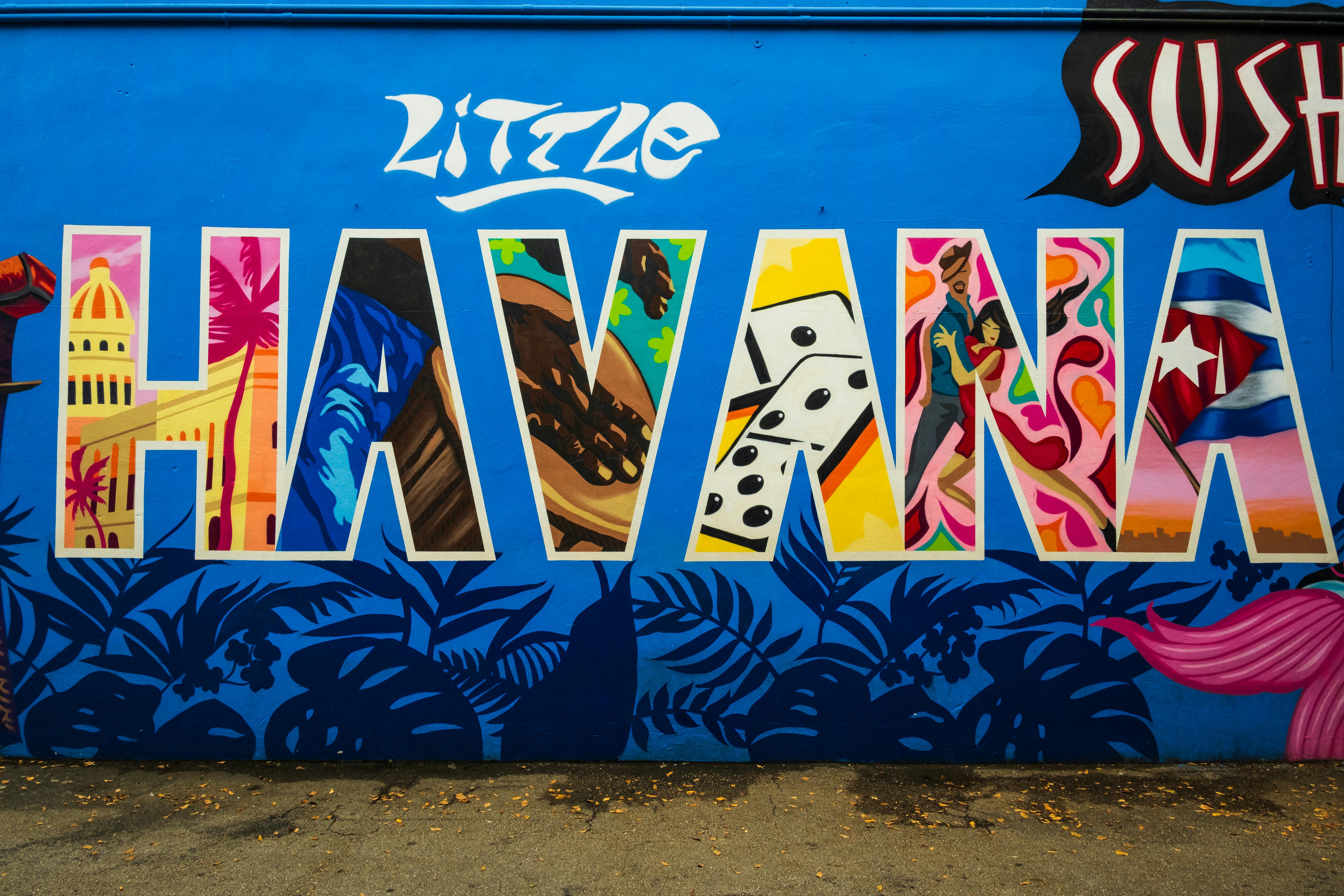
Little Havana runs west of downtown Miami along Calle Ocho (SW 8th Street), and it's been the cultural center of the city's Cuban community since exiles began settling here in the 1960s. The National Trust for Historic Preservation named it a National Treasure in 2017, and it still functions as a working neighborhood rather than something that was set up for visitors. That's what makes the Little Havana ride one of the more authentic things you can do in the city, and a good way to understand the authentic Miami experience beyond what most itineraries cover.
The Route
The main cultural corridor runs along SW 8th Street between 12th and 17th Avenues, about five minutes from downtown. The tradition here is the ventanita, a small walk-up window where locals order cafecito, catch up on the day, and keep moving. On a motorcycle, you can work the strip the same way: pull up, order a colada (a sweetened espresso that comes with small plastic cups for sharing), and ride to the next one. Some of the smaller windows are cash-only.
Where to Stop
- Versailles Restaurant: Open since 1971, and widely considered the most famous Cuban restaurant in the country. The ventanita out front is the center of Miami's cafecito culture.
- El Exquisito: Family-run since 1974, serving traditional Cuban dishes like vaca frita and ropa vieja in a dining room that hasn't changed much since it opened
- Los Pinareños Fruteria: An open-air fruit market and ventanita with fresh-squeezed tropical juices. The place has looked more or less the same for 30 years.
- Azucar Ice Cream Company: Cuban-inspired flavors like Abuela Maria, which layers guava, cream cheese, and Maria cookies into a single scoop
- Domino Park: Officially Máximo Gómez Park, where locals have been gathering to play dominoes since the 1970s. Open daily, and you can watch from the edges.
4. Cross the Rickenbacker Causeway to Key Biscayne
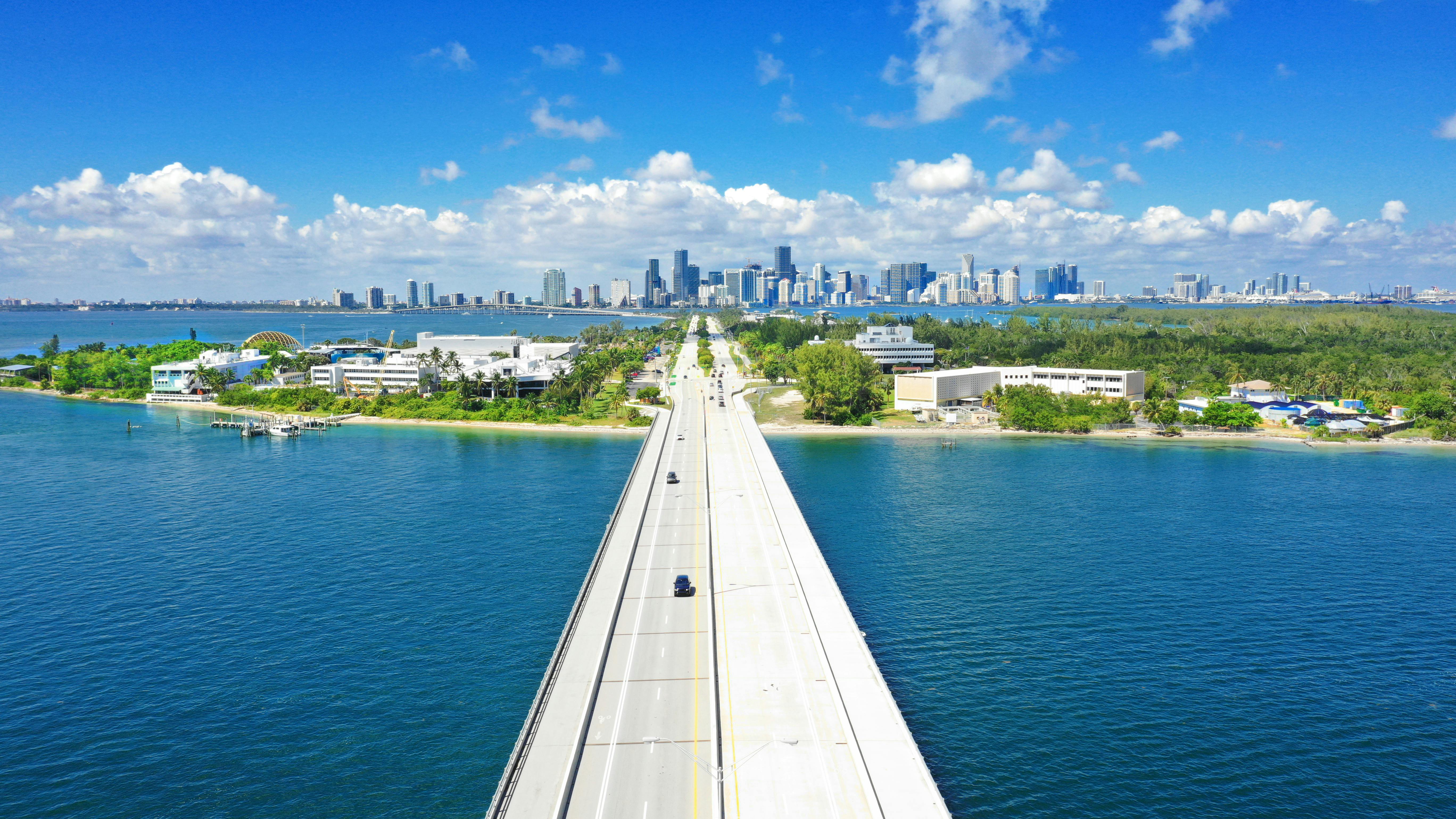
The Rickenbacker Causeway is a bridge that connects Brickell to Virginia Key and Key Biscayne, crossing Biscayne Bay about two miles south of downtown. It's one of those hidden gems in Miami that locals use all the time but that most visitors never think about. The bridge rises high enough to give you open views of the skyline, the bay, and the Atlantic all at once, and once you're across, Key Biscayne operates at a completely different pace than the rest of the city. The full loop from Brickell to the southern tip of the island and back is about 16 miles.
The Route
The causeway starts at the edge of Brickell and crosses the bay with a gradual climb before dropping onto Virginia Key. From there, Crandon Boulevard runs the length of Key Biscayne with parks and beaches on both sides. The toll is around $2.25 for motorcycles, and it gets windy at the top of the bridge. Early weekday mornings are the lightest traffic, and if you time it right, the sunrise from the top of the causeway is one of the better views in the city.
Where to Stop
- Bill Baggs Cape Florida State Park: At the southern tip of Key Biscayne, home to the Cape Florida Lighthouse, built in 1825 and the oldest standing structure in Miami-Dade County
- Crandon Park Beach: A mile and a half of shoreline consistently ranked among the best beaches in the country, with calm water and significantly less foot traffic than South Beach
- Boater's Grill (inside Bill Baggs): A waterfront restaurant right on the beach, open for lunch and serving fresh seafood with a view of the lighthouse
5. Take a Night Cruise Through the Art Deco District
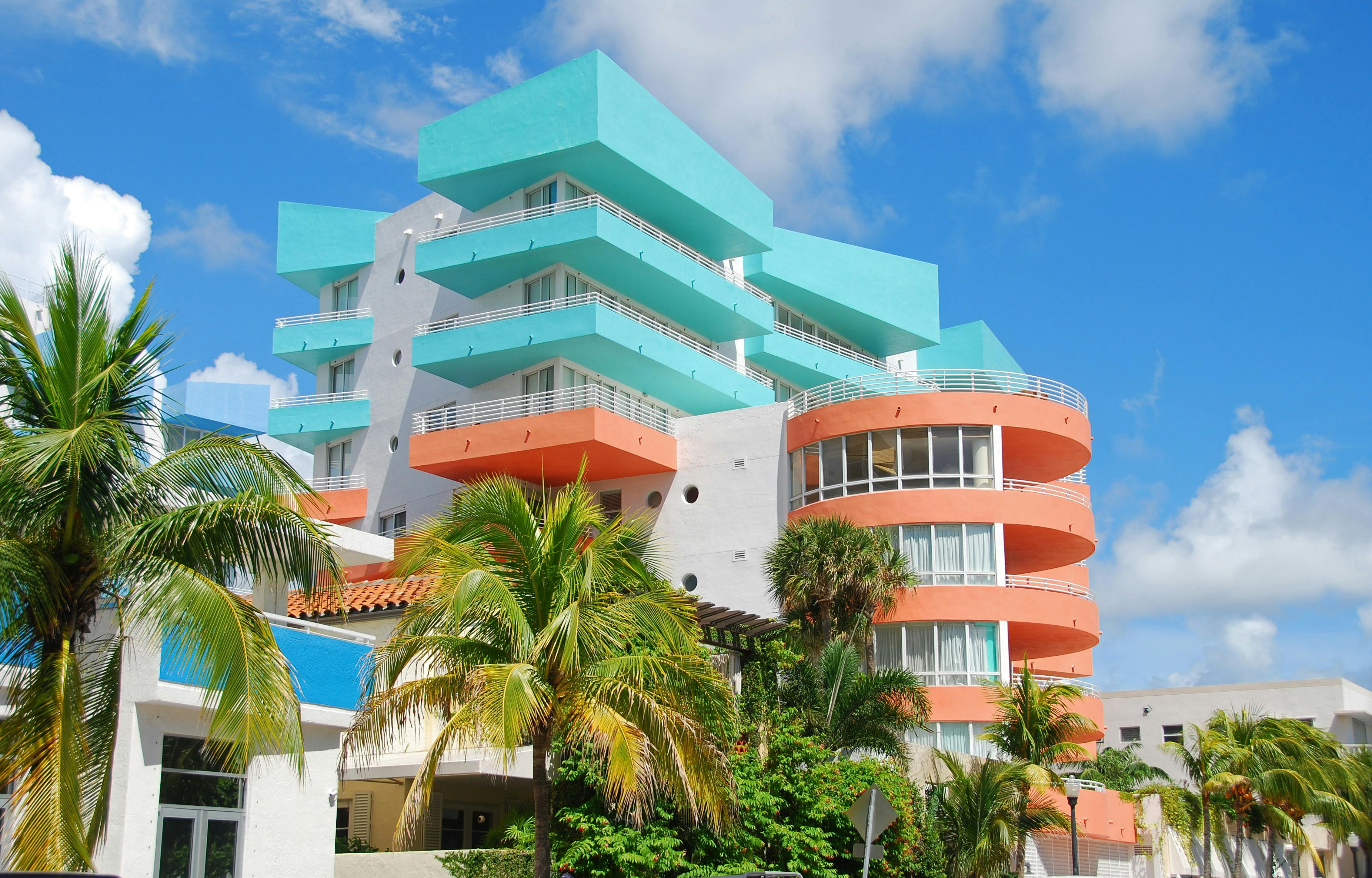
Miami Beach's Art Deco Historic District holds the largest collection of Art Deco architecture in the world, with over 800 buildings constructed between the 1920s and 1940s. During the day, the area is crowded and the buildings tend to blend into the general South Beach activity. At night, the original neon signs light up and you can actually see what makes the architecture here worth preserving. The district was nearly demolished in the 1970s before a landmark preservation campaign saved it, and each building's neon was part of the original design, meaning they were always meant to be seen after dark.
The Route
Start on Ocean Drive around 5th Street and ride north to 15th. Loop to Collins Avenue heading south, then cut west to Washington Avenue for a different feel. The full circuit is about three miles at a slow pace. Weeknights between 8 and 10 p.m. are the best window. Weekend nights during peak season are bumper-to-bumper on Ocean Drive.
Where to Stop
- The Colony Hotel: Built in 1935, one of the most recognizable Art Deco buildings in the world. The blue neon sign is visible from several blocks away after dark.
- The Carlyle: Built in 1941, featured in Scarface and The Birdcage. The facade details are easier to appreciate at night without the daytime crowd in the way.
- Mac's Club Deuce: A dive bar that's been open since 1964, one of the few remaining spots on South Beach that still pulls a mostly local crowd
- Art Deco Welcome Center: Located in the restored 1950s Oceanfront Auditorium, with exhibits on the district's history and the preservation campaign that kept it from being torn down
6. Head South to Homestead for Local Seafood
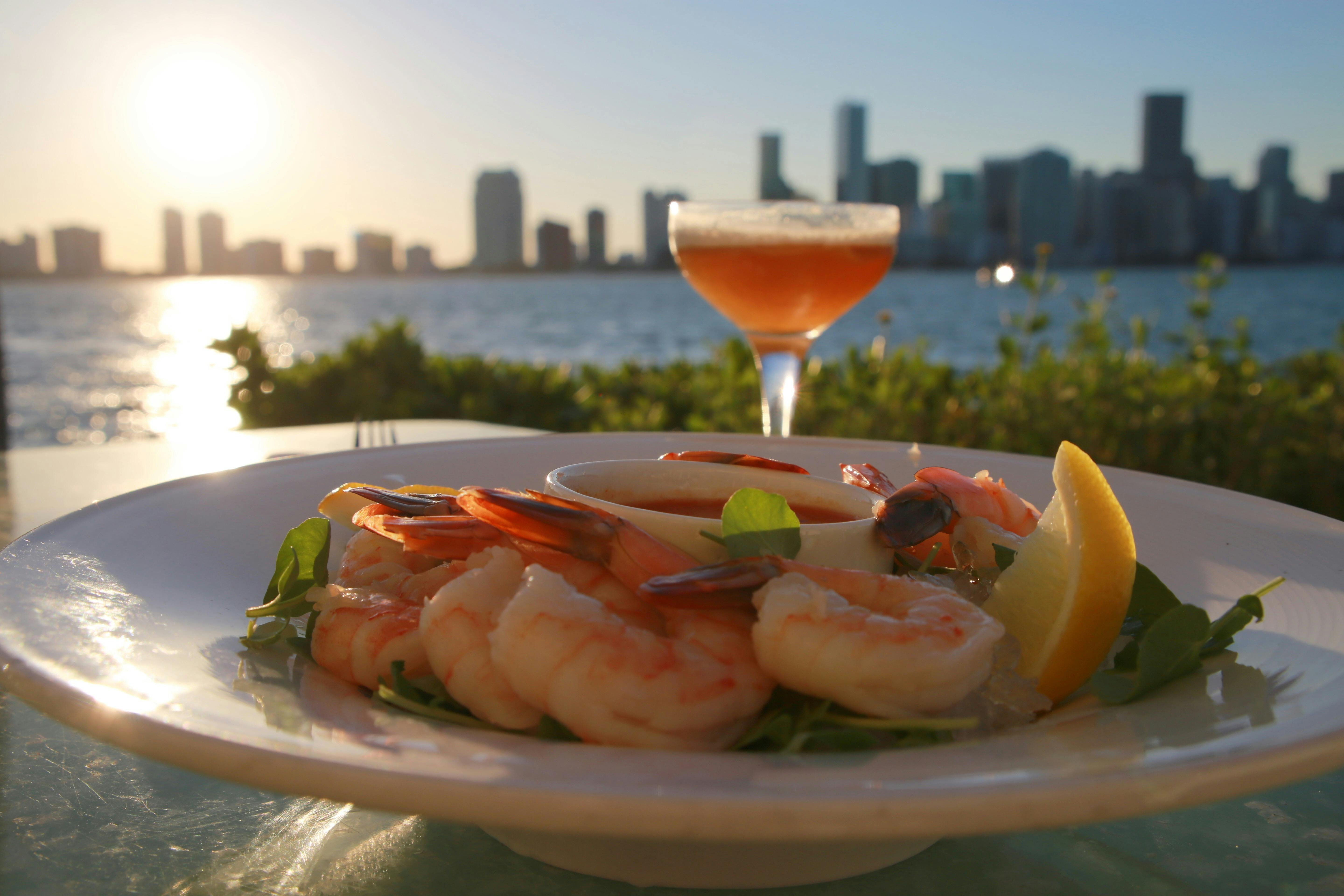
Homestead sits about 45 minutes south of downtown Miami at the intersection of US-1 and the road to Everglades National Park. It's an agricultural community at the top of the Florida Keys fishing corridor, surrounded by tropical fruit farms and nurseries. The restaurants here work with fish that was caught that morning and charge accordingly, which is to say, a lot less than anything in the tourist-heavy parts of the city. If you're wondering what are the hidden gems of Miami when it comes to food, the answer is further south than most visitors think to look.
The Route
US-1 south past Cutler Bay. Once the development thins out and the farmland starts, you're in a different part of South Florida. From Homestead, you're also 10 minutes from the Everglades entrance and 30 minutes from Key Largo, which makes this a good starting point for longer Miami motorcycle routes.
Where to Stop
- Robert Is Here: Known for exotic fruit milkshakes made with nothing but fresh fruit and milk. (Bonus: there’s a free area with goats, tortoises, and emus).
- FreshCo Fish Market and Grill: Family-run, sourcing directly from commercial fishing docks in the Florida Keys.
- Black Point Ocean Grill (at Black Point Marina): Waterfront dining where the seafood comes off the boats next door.
- Farmers Market Restaurant: A Homestead staple that fills up with regulars for locally sourced comfort food.
7. Explore the Tree-Lined Streets of Coral Gables
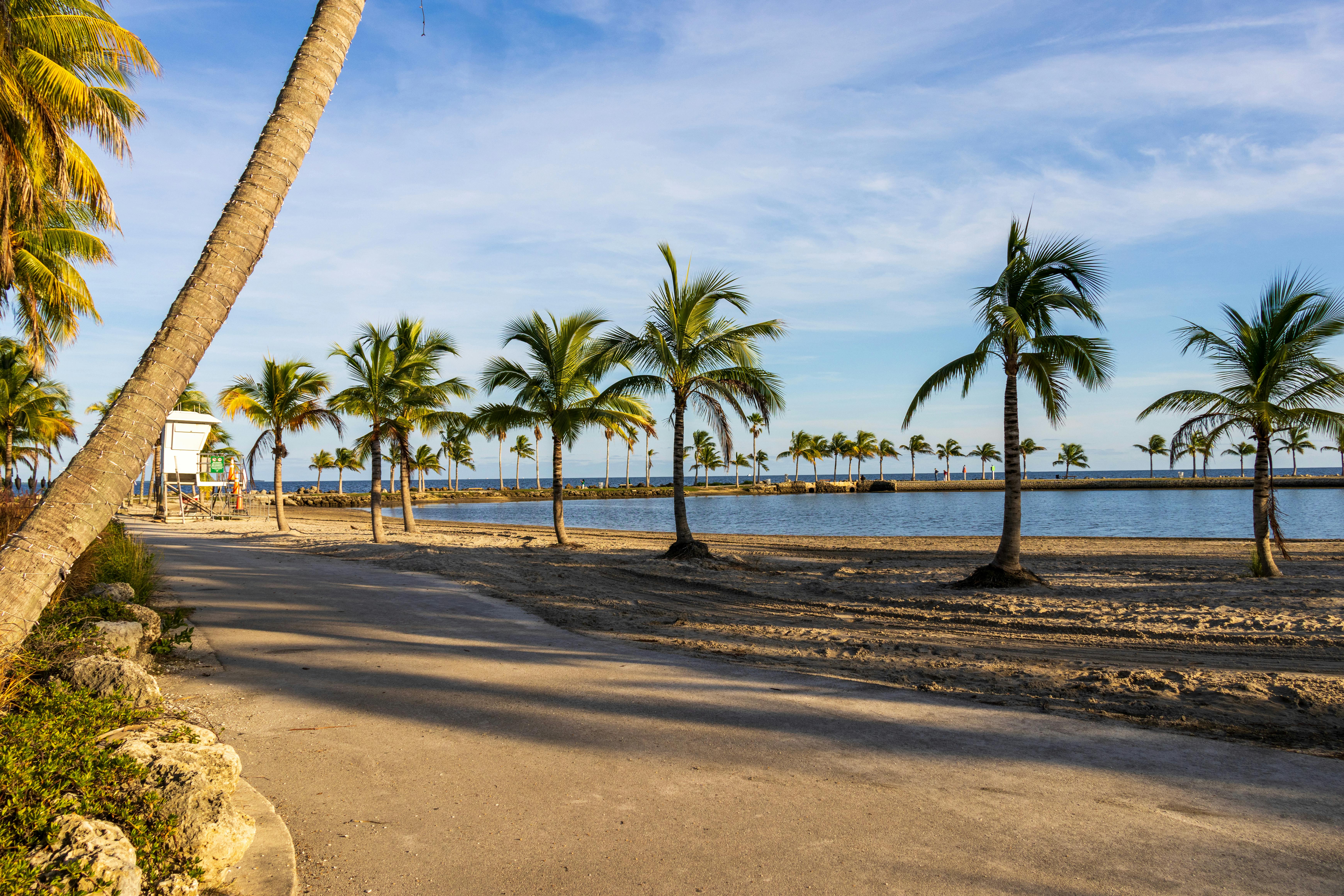
Coral Gables was established in 1925 as one of the first planned communities in the United States, built around Mediterranean Revival architecture with banyan tree canopies covering the main boulevards. Most neighborhoods in Miami have been torn down and rebuilt at least once. Coral Gables has been protective of its original character from the start, and you can feel that when you ride through it. Looking to find where locals eat in Miami when they want a good meal without the South Beach scene? A lot of them end up here.
The Route
Follow Coral Way and Granada Boulevard down the residential area, where the architecture changes almost block by block. Loop along Miracle Mile, the main commercial street, then park near the pedestrian-only Giralda Avenue for dinner. Late afternoon is the best time for the residential streets, since it’s when the light comes through the banyan canopy at an angle.
Where to Stop
- Venetian Pool: A spring-fed swimming pool carved from a coral rock quarry in 1924, listed on the National Register of Historic Places.
- Bouchon Bistro: Thomas Keller's French bistro inside the historic La Palma building. The garden courtyard is worth the visit on its own.
- Threefold Cafe: The only Australian-style cafe in the area, serving Panther Coffee and Zak the Baker bread with an all-day breakfast menu.
- Books and Books: An independent bookstore that's been a Coral Gables fixture for decades. Cafe attached for a cortadito and some post-ride reading.
Rent a Motorcycle in Miami with Riders Share
If reading through these spots has you picturing yourself on the road, a Miami motorcycle rental is the next step. Riders Share currently has 170+ motorcycle rentals available in Miami, with bikes ready for everything from quick neighborhood rides to full-day routes out of the city. Available brands include Harley-Davidson, BMW, Ducati, Honda, Yamaha, Kawasaki, and Triumph. Browse current listings, choose your dates, and pick the bike that fits how you want to experience Miami.

Riding Far? See Available Florida Motorcycle Rentals near You
Some trips naturally turn into more than one stop, especially once you start looking at the roads outside Miami. Riders Share has over 400 motorcycle rentals available across Florida, which lets you check availability in other cities and choose a bike based on where you’re headed next. Browse through our current Florida motorcycle rentals to see what’s available near you.
Experience Miami the Right the Local Way
Miami has a lot more to offer than what most visitors see in a long weekend, and the best parts of the city tend to be the ones that take a little more effort to get to. A motorcycle makes that easier, but the real point is being willing to look past the obvious and spend your time in the neighborhoods that actually make this city what it is.
Miami Local Experience FAQ
Before you start planning stops or routes, here’s a quick recap of how locals actually experience Miami, based on the questions that come up most often.
What do locals do in Miami?
Miami locals stick to neighborhoods like Little Havana, Coral Gables, and Key Biscayne. Morning cafecito at a ventanita, beach days at Crandon Park instead of South Beach, and dinner at neighborhood spots that have been open for decades.
What is the best way to explore Miami?
A motorcycle is the best way to explore Miami. The city's best neighborhoods are spread out, traffic is heavy, and parking is limited in places like Wynwood and Little Havana. On two wheels, you can move between neighborhoods without losing time.
What are the hidden gems of Miami?
The Rickenbacker Causeway at sunrise, the Everglades on Route 41 before 8 a.m., the Art Deco district after dark, the Redland agricultural area near Homestead, and the residential streets of Coral Gables are all places locals visit regularly that rarely show up on a visitor itinerary.
Where do locals eat in Miami?
El Exquisito and Versailles in Little Havana for Cuban classics, La Fama in Wynwood for old-school comfort food, FreshCo Fish Market and Grill in Homestead for fresh-catch seafood, Threefold Cafe in Coral Gables for Australian-style brunch, and Black Point Ocean Grill for waterfront dining without the South Beach markup.
Related Articles
Mon - Fri: 8-8 CT
Weekends: 9-8 CT
