Blue Ridge Parkway Motorcycle Guide: 469 Miles, Best Overlooks & Fall Timing
Nov 8, 2025
Tags:guideblue-ridge-parkwaytour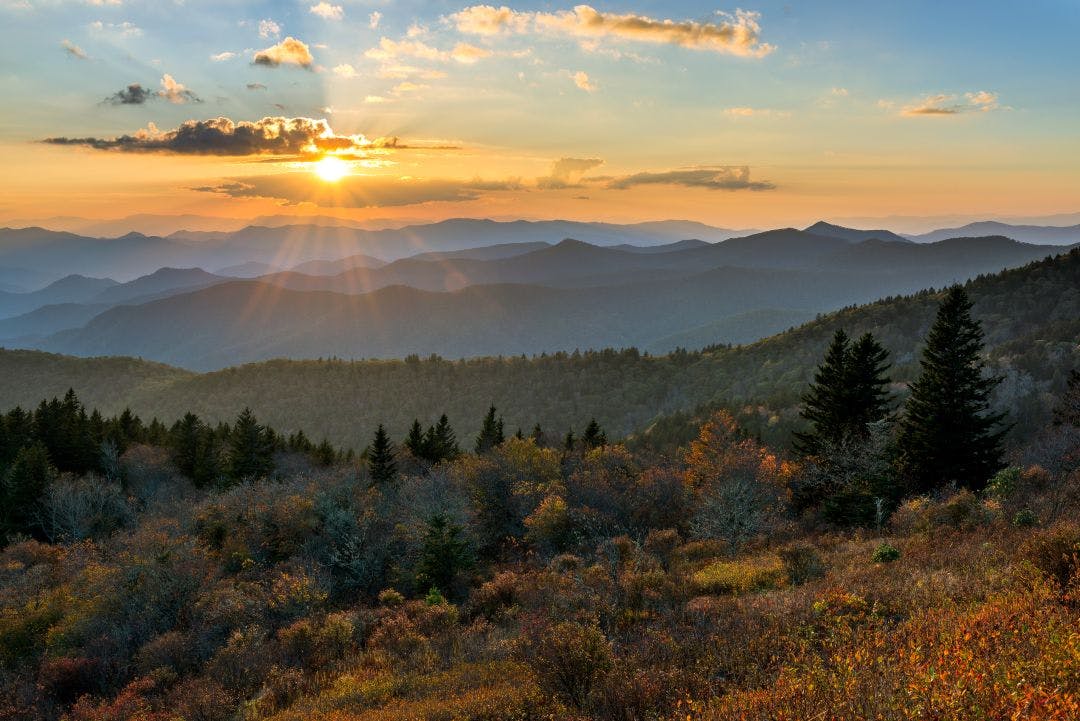
There’s just something about the Blue Ridge Parkway that feels built for motorcycles. The road moves with the mountains, never in a hurry, and every few miles there’s another pull-off that makes you want to stop, take a breath, and just look. If you’re thinking about riding the full 469 miles, you’re probably wondering how long it really takes, what’s worth stopping for, and when the best time is to go. In this blog, we break the Parkway into sections you can actually plan around and share the details you’ll want before you go.
Here's the quick version: The Blue Ridge Parkway runs 469 miles from Rockfish Gap, Virginia to Cherokee, North Carolina. The entire route maintains a 45 mph speed limit, winds through elevations ranging from 650 feet to 6,053 feet at Richland Balsam, and typically takes 10 to 12 hours to ride straight through, though most riders break it into 2 or 3 days. The parkway is beginner-friendly with smooth pavement, gentle curves, and no commercial traffic. Fall foliage peaks mid-October in Virginia and varies by elevation in North Carolina (early to mid-October at high elevations, late October at lower elevations). This blue ridge drive in Virginia and North Carolina offers some of the most accessible mountain riding in the eastern United States.
If you want the full Parkway experience without worrying about maps or planning, Riders Share has guided rides hosted by local riders who know the route inside and out. See what guided tours are available and reserve one for your trip.

Blue Ridge Parkway Motorcycle Tour Map
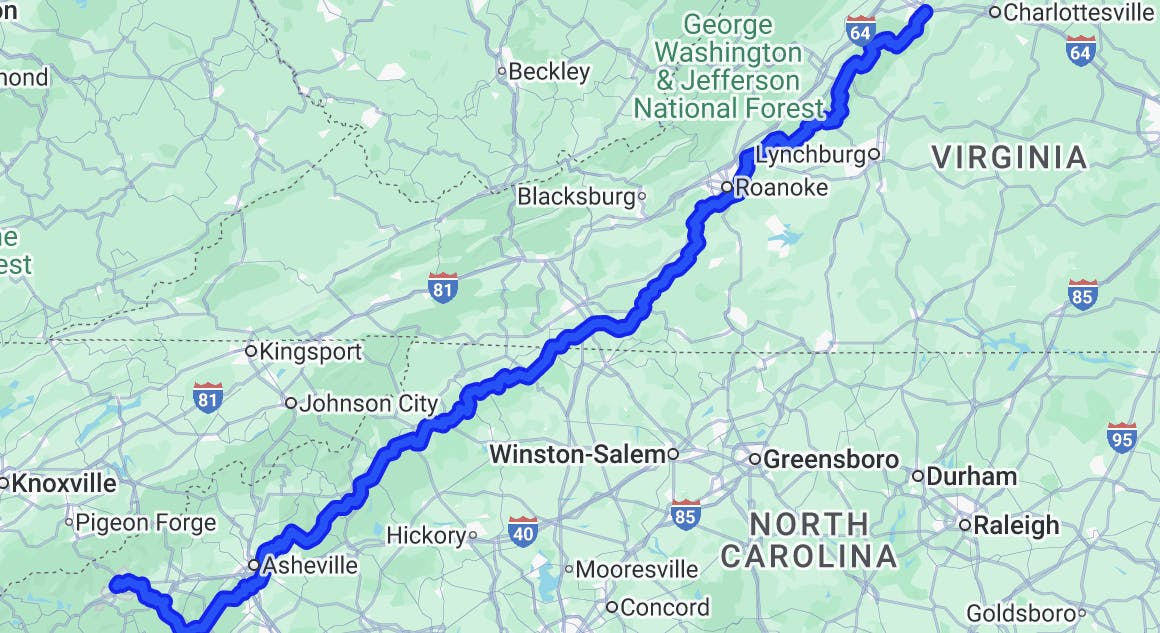
View and download a virtual map of the Blue Ridge Parkway below.

Where Does Blue Ridge Parkway Start and End?
The Blue Ridge Parkway starts at Rockfish Gap, Virginia (Milepost 0) where it connects with Skyline Drive, and ends 469 miles later in Cherokee, North Carolina at the entrance to Great Smoky Mountains National Park. Rockfish Gap sits at the intersection of I-64 and US-250 near Waynesboro, Virginia, making it easy to access from Richmond, Washington D.C., or Charlottesville. The southern end point in Cherokee connects directly to US-441, which takes you into the Smokies or down to the Tail of the Dragon about 50 miles south.
The Blue Ridge Parkway in Four Sections: Ridge, Plateau, Highlands, and Pisgah
Breaking the BRP motorcycle route into four distinct sections makes planning easier and helps you understand what each part of the ride offers. Here's the mile-by-mile breakdown with what you need to know for each section:
- Ridge Section
- Plateau Section
- Highlands Section
- Pisgah Section
Ridge Section: Milepost 0-121 (Rockfish Gap to Roanoke)
Ride Time: 3 to 3.5 hours without stops
This section follows the Blue Ridge Mountains through Virginia, staying at moderate elevations mostly between 2,000 and 3,500 feet. The road curves easily through hardwood forests and opens up to valley views on both sides. It's a gentle introduction to the parkway if you're starting from the north.
Must-Stop Overlooks:
- Humpback Rocks (MP 6) - GPS: 37.9681, -78.9003
- Whetstone Ridge (MP 29) - GPS: 37.8483, -79.1386
- Peaks of Otter (MP 86) - GPS: 37.4465, -79.6078
- Roanoke River Gorge (MP 114.9) - GPS: 37.2156, -79.8397
Visitor Centers: Humpback Rocks (MP 5.8), James River (MP 63.6), Peaks of Otter (MP 86)
Gas Proximity: Waynesboro (near MP 0), Buena Vista (15 miles from MP 63), Bedford (9 miles from MP 86), Roanoke (exits at multiple points between MP 110-121)
Lodging: Peaks of Otter Lodge (MP 86) is the only on-parkway lodging in this section. Otherwise, Waynesboro, Lexington, and Roanoke all have hotels within a short ride of the parkway. Campgrounds available at Otter Creek (MP 60.8) and Peaks of Otter (MP 86).
Plateau Section: Milepost 121-217 (Roanoke to Cumberland Knob)
Ride Time: 2.5 to 3 hours without stops
The plateau section runs through the Virginia highlands at relatively consistent elevations around 2,500 to 3,500 feet. This is where you'll find some of the most iconic pastoral scenery on the parkway like meadows, split-rail fences, and historic farms. Mabry Mill also sits right in the heart of this section and draws massive crowds during fall foliage season.
Must-Stop Overlooks:
- Smart View (MP 154.5) - GPS: 36.7525, -80.2050
- Mabry Mill (MP 176) - GPS: 36.6203, -80.4689
- Groundhog Mountain (MP 188.8) - GPS: 36.4944, -80.6072
- Cumberland Knob (MP 217.5) - GPS: 36.5917, -80.8753
Visitor Centers: Rocky Knob (MP 169), Mabry Mill (MP 176)
Gas Proximity: Floyd (12 miles from MP 165), Galax (7 miles from MP 215). This section has the longest stretches without easy gas access, so fill up in Roanoke before heading south or plan to exit the parkway.
Lodging: Rocky Knob Cabins (MP 174) offer rustic accommodations. Nearby towns include Floyd (quirky mountain town with a great music scene) and Galax. Campgrounds at Rocky Knob (MP 167.1) and Doughton Park (MP 239).
Highlands Section: Milepost 217-384 (Cumberland Knob to Mount Mitchell)
Ride Time: 4 to 5 hours without stops
This is where the Blue Ridge Parkway gets serious about elevation. You'll climb from about 2,885 feet at Cumberland Knob to over 6,000 feet at several points, including the Richland Balsam summit at 6,053 feet (also known as the highest point on the entire parkway). The Linn Cove Viaduct, Grandfather Mountain, and Mount Mitchell all fall within this section, making it the most dramatic and scenic part of the entire Appalachian motorcycle trip.
Must-Stop Overlooks:
- Blowing Rock (MP 291.9) - GPS: 36.1397, -81.6778
- Moses H. Cone Memorial Park (MP 294) - GPS: 36.1433, -81.6911
- Linn Cove Viaduct (MP 304.4) - GPS: 36.0836, -81.7369
- Linville Falls (MP 316.4) - GPS: 35.9631, -81.9300
- Crabtree Falls (MP 339.5) - GPS: 35.8206, -82.1464
- Mount Mitchell State Park (MP 355.4) - GPS: 35.7447, -82.2789
Visitor Centers: Moses H. Cone Memorial Park (MP 294), Linn Cove Viaduct (MP 304), Linville Falls (MP 316.4), Museum of North Carolina Minerals (MP 331)
Gas Proximity: Boone (8 miles from MP 291), Linville (2 miles from MP 317), Spruce Pine (10 miles from MP 331), Burnsville (12 miles from MP 355). Gas is more accessible in this section since you're closer to larger towns.
Lodging: Blowing Rock and Boone are both within easy reach and offer everything from budget motels to upscale inns. Linville and Little Switzerland are smaller but charming. Campgrounds at Julian Price (MP 297), Linville Falls (MP 316.4), and Crabtree Meadows (MP 339.5).
Special Note: The Boone Fork Trail (MP 296.4) is worth a stop if you're into hiking. It's a 5-mile loop through forests, meadows, and along streams–one of the best trails on the parkway.
Pisgah Section: Milepost 384-469 (Mount Mitchell to Cherokee)
Ride Time: 2.5 to 3 hours without stops
The final section of the parkway descends from the high peaks of the Black Mountains down to Cherokee at about 2,000 feet. You'll pass through Pisgah National Forest, which is dense, green, and feels more remote than earlier sections. The curves tighten up a bit here, and the road gets more technical as you drop elevation.
Must-Stop Overlooks:
- Graveyard Fields (MP 418.8) - GPS: 35.3192, -82.8458
- Devil's Courthouse (MP 422.4) - GPS: 35.3028, -82.8911
- Richland Balsam (MP 431.4) - GPS: 35.3625, -82.9961
- Waterrock Knob (MP 451.2) - GPS: 35.4592, -83.1358
Visitor Centers: Waterrock Knob (MP 451.2)
Gas Proximity: Waynesville (17 miles from MP 443), Cherokee (at MP 469). This section requires planning—fill up before you enter or plan to exit mid-section.
Lodging: Waynesville and Maggie Valley are the closest towns with hotels and restaurants. Cherokee has multiple lodging options at the southern terminus. The Pisgah Inn (MP 408.6) offers rooms right on the parkway with incredible views. Campground at Mount Pisgah (MP 408.6).
When to Ride the BRP Motorcycle Route
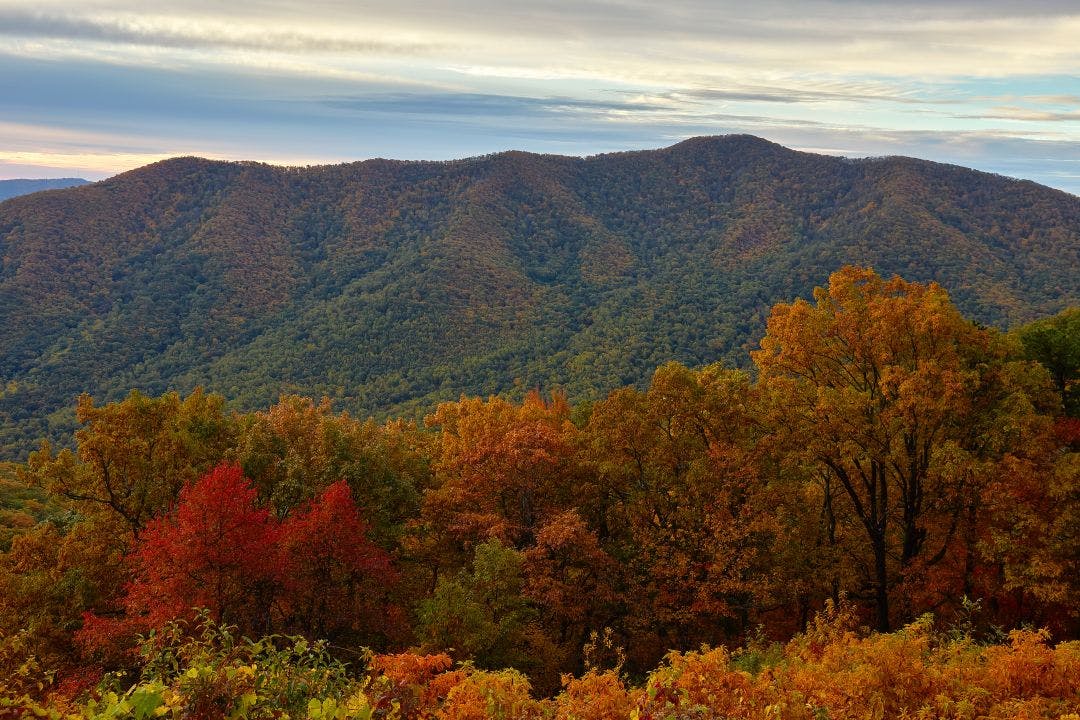
Timing your Blue Ridge Parkway motorcycle tour right makes the difference between a good ride and an unforgettable one. Fall is peak season for a reason, but each section of the parkway changes color on its own schedule based on elevation.
Virginia (Milepost 0-217): Peak fall color typically hits mid-October, usually around October 10-20. The Ridge and Plateau sections sit at lower average elevations, so the leaves turn later than the high peaks in North Carolina. If you're riding the full parkway in fall, start this section around October 15 for the best color.
North Carolina High Elevations (Milepost 217-384): Areas above 5,000 feet, including Grandfather Mountain, Linville, and Mount Mitchell, peak early to mid-October, often October 5-15. The higher you go, the earlier the leaves turn. Richland Balsam and the Black Mountains can show near-peak color by the end of September in some years.
North Carolina Lower Elevations (Milepost 384-469): The Pisgah section and areas below 4,000 feet peak late October, usually October 20-30. This section stays green longer and holds its color into early November in milder years.
The Strategy
If you want to catch peak color across the entire parkway, mid-October is your best bet. You'll see late-season color in Virginia, peak color in the mid-elevation North Carolina sections, and just-past-peak in the highest areas. Alternatively, ride it twice—once in early October for the high country, once in late October for the lower sections.
Spring (April-May): Wildflowers bloom from late April through May as spring moves up the mountain. The parkway is less crowded, temperatures are mild, and everything is green and fresh. Just be aware that some higher elevation sections may still have closures through early April.
Summer (June-August): This is the high season for good reason–warm weather, long days, and everything is open. The downside is afternoon thunderstorms are common, and popular overlooks get crowded by mid-morning. Weekdays are noticeably quieter than weekends.
Winter (November-March): Large sections of the parkway close due to ice and snow, particularly at higher elevations. Even sections that remain "open" can close temporarily after storms. If you're determined to ride in winter, stick to the lower elevation Virginia sections and check closures daily. Not recommended for most riders. Click HERE to stay up-to-date on the road status and closures of the Blue Ride Parkway.
Blue Ridge Parkway Top Attractions
The parkway has literally hundreds of overlooks and pull-offs, but some spots are worth the stop more than others. Here's what riders consistently rank as the must-see attractions along the route, organized by milepost so you can plan your stops:
- Humpback Rocks (Milepost 6): This is one of the first major stops heading south, and it sets the tone for the whole ride. There's a visitor center here with a reconstructed 1890s mountain farm that's genuinely interesting, and if you've got 30 minutes, the hike up to Humpback Rocks summit gives you 360-degree views of the Shenandoah Valley. The trailhead is right off the parkway.
- Peaks of Otter (Milepost 86): Three mountain peaks (Sharp Top, Flat Top, and Harkening Hill) dominate the landscape here. The visitor center sits on Abbott Lake, which is postcard-perfect in the morning light. Sharp Top Mountain trail is steep but worth it if you're up for the climb. There's also a lodge here if you're looking for overnight accommodations without camping.
- Mabry Mill (Milepost 176): This is probably the most photographed spot on the entire parkway. The 1910 grist mill sits next to a pond, and in fall when the leaves are changing, it's absolutely stunning. There's a restaurant here serving Southern comfort food, and demonstrations of blacksmithing and moonshine-making during peak season. Get here early because by 10 a.m. the parking lot is usually packed.
- Moses H. Cone Memorial Park (Milepost 294): The historic Cone Manor sits at the center of 3,500 acres of trails, meadows, and forests. The Craft Center inside sells high-quality Appalachian crafts, and the carriage trails are open to hikers and riders. Bass Lake loop is an easy walk if you want to stretch your legs.
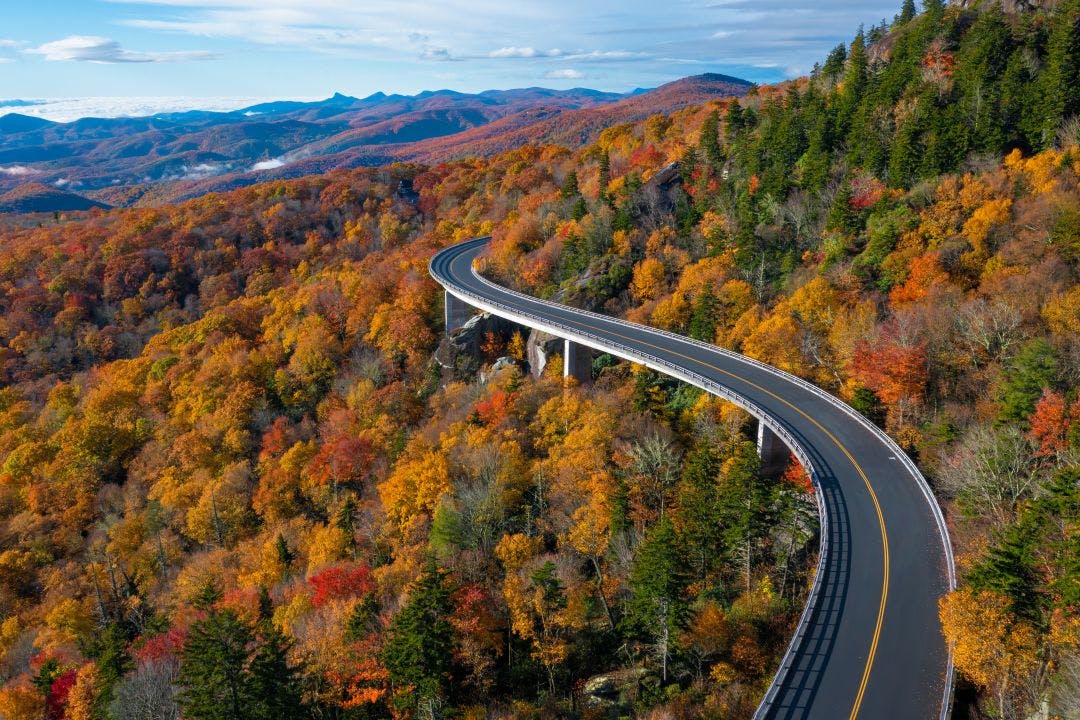
- Linn Cove Viaduct (Milepost 304): This is engineering as art. The 1,243-foot viaduct curves around the side of Grandfather Mountain in a way that looks almost impossible. There's a visitor center with a viewing platform underneath the viaduct where you can see how it was built without damaging the mountain. Photos don't do this one justice, you need to see it in person.
- Linville Falls (Milepost 316): One of the most powerful waterfalls in the North Carolina mountains. The Plunge Basin Overlook Trail is only about a mile round trip and takes you to views of the falls dropping into Linville Gorge. It's a quick stop but absolutely worth it.
- Mount Mitchell State Park (Milepost 355): At 6,684 feet, Mount Mitchell is the highest peak east of the Mississippi. The spur road off the parkway takes you to within a short walk of the summit. The views stretch for miles on a clear day, though you'll want a jacket—it's always cooler up here than you’d expect.
- Waterrock Knob (Milepost 451): Near the southern end of the parkway, this spot offers panoramic views from a half-mile summit trail. The visitor center here focuses on Cherokee history and culture, which adds context to the landscape you've been riding through.
If you're wondering what to check out when driving route 360 in Virginia or exploring the mountains that blue ridge parkway has to offer, these eight attractions give you a pretty good layout for planning your stops without overdoing it. You could hit all of them in a long day, or spread them across two days and actually enjoy each one.
Routes Beyond the Blue Ridge Parkway
One of the best things about the Blue Ridge Parkway is that it doesn't exist in isolation. A lot of legendary motorcycle routes connect to it, letting you build a longer trip if you've got the time.
Skyline Drive (North): Skyline Drive continues north from Rockfish Gap for another 105 miles through Shenandoah National Park. The two roads share similar characteristics: smooth pavement, low speed limits, mountain scenery. Riding Skyline Drive and the Blue Ridge Parkway together gives you 574 miles of uninterrupted scenic riding. Skyline connects to I-66 near Front Royal, Virginia.
Tail of the Dragon (South): About 50 miles south of Cherokee, the Tail of the Dragon (US-129) offers 318 curves in 11 miles. It's a completely different riding experience: tight, technical, and adrenaline-focused compared to the parkway's relaxed pace. Most riders who finish the BRP head to the Dragon to finish strong.
Cherohala Skyway (Southwest): This 43-mile scenic byway runs from Tellico Plains, Tennessee to Robbinsville, North Carolina. It's similar in spirit to the Blue Ridge Parkway but more remote and less developed. Access it from Cherokee via US-74 and US-129. The Skyway climbs to 5,390 feet and offers incredible views with almost no traffic.
Routes to Major Cities:
- Richmond, Virginia: I-64 east from Rockfish Gap (90 miles)
- Roanoke, Virginia: Multiple parkway exits between MP 110-121 (direct access)
- Asheville, North Carolina: US-70 or I-40 from various points between MP 382-393 (15-25 miles)
For riders building a multi-day Appalachian motorcycle trip, the classic loop includes Skyline Drive, the Blue Ridge Parkway, the Tail of the Dragon, and the Cherohala Skyway—about 800 miles total, ideal for a 5 to 7-day trip.
Can You Ride the Blue Ridge Parkway in One Day?
Yes, you can ride the entire 469 miles in one day. It’ll take you 10 to 12 hours if you keep stops minimal and maintain a steady pace. The 45 mph speed limit and the winding nature of the road mean you're not covering ground fast. Factor in gas stops, bathroom breaks, and at least a few photo stops, and you're looking at a full 12-hour day on the bike.
That said, most riders don't recommend it. The Blue Ridge Parkway is specifically designed to be taken slowly, and if we’re honest, rushing through defeats the purpose. You'll miss overlooks, skip the hikes, and end the day exhausted instead of energized. A two-day trip lets you hit the major attractions without feeling pressed for time. Three days is even better, since you’ll have more time to explore side roads, take longer hikes, and actually enjoy the towns near the parkway.
Is the Blue Ridge Parkway Beginner-Friendly?
The Blue Ridge Parkway is one of the most beginner-friendly motorcycle routes in the country. The road is well-maintained with smooth pavement, clearly marked curves, and gentle grades. The 45 mph speed limit keeps the pace manageable, and there's no commercial truck traffic to worry about (the parkway bans commercial vehicles entirely!)
Overall difficulty? Easy to moderate. If you're comfortable riding on highways and can handle consistent curves, you'll have no problem with the parkway. New riders should start with one of the lower-elevation sections to build confidence before tackling the high peaks.
Plan Your Blue Ridge Parkway Motorcycle Tour with Riders Share
Guided rides in this part of the Appalachians let you experience the Parkway and the surrounding mountain roads without spending hours planning every turn. Riders Share has local hosts offering guided motorcycle tours throughout Virginia and North Carolina, including scenic overlooks, waterfalls, small mountain towns, and connecting routes off the Parkway. It’s an easy way to ride with someone who knows the area well and can show you spots most people miss. Browse guided motorcycle tours on Riders Share and book one that lines up with your trip.
Blue Ridge Parkway Overlook Directory
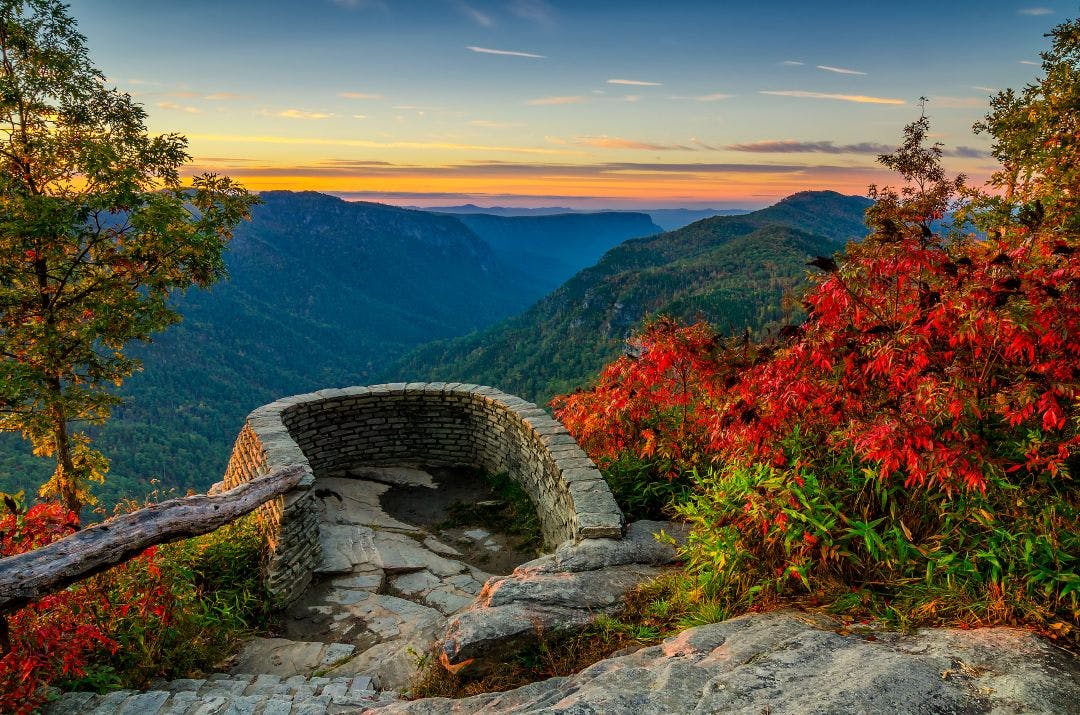
Here's a curated list of essential overlooks with GPS coordinates for easy navigation. These are spread across the entire 469-mile route and include parking, restrooms where available, and notable features:
Virginia Section (MP 0-217):
- Humpback Rocks (MP 6) - 37.9681, -78.9003 - Visitor center, hiking trail
- Yankee Horse (MP 34.4) - 37.8017, -79.2019 - Reconstructed logging railroad
- Otter Creek (MP 63.6) - 37.5747, -79.5136 - James River vista
- Peaks of Otter (MP 86) - 37.4465, -79.6078 - Sharp Top Mountain views
- Roanoke River Gorge (MP 114.9) - 37.2156, -79.8397 - Deep valley views
- Smart View (MP 154.5) - 36.7525, -80.2050 - Pastoral farmland
- Mabry Mill (MP 176) - 36.6203, -80.4689 - Historic mill, restaurant
- Groundhog Mountain (MP 188.8) - 36.4944, -80.6072 - Observation tower
North Carolina Highlands (MP 217-384):
- Cumberland Knob (MP 217.5) - 36.5917, -80.8753 - First parkway section built
- E.B. Jeffress Park (MP 272) - 36.2733, -81.3453 - Cascades trail to waterfall
- Blowing Rock (MP 291.9) - 36.1397, -81.6778 - Rock formation overhanging valley
- Bass Lake (MP 294.6) - 36.1458, -81.6858 - Moses Cone Memorial Park
- Linn Cove Viaduct (MP 304.4) - 36.0836, -81.7369 - Engineering marvel
- Linville Falls (MP 316.4) - 35.9631, -81.9300 - Waterfall trails
- Crabtree Falls (MP 339.5) - 35.8206, -82.1464 - 70-foot waterfall
- Mount Mitchell (MP 355.4) - 35.7447, -82.2789 - Highest peak east of Mississippi
North Carolina Pisgah (MP 384-469):
- Craggy Gardens (MP 364.6) - 35.7011, -82.3847 - Rhododendron gardens, June bloom
- Folk Art Center (MP 382) - 35.5494, -82.5386 - Appalachian crafts
- Graveyard Fields (MP 418.8) - 35.3192, -82.8458 - Open meadows, hiking trails
- Devil's Courthouse (MP 422.4) - 35.3028, -82.8911 - 360-degree summit views
- Richland Balsam (MP 431.4) - 35.3625, -82.9961 - Highest point on parkway (6,053 ft)
- Waterrock Knob (MP 451.2) - 35.4592, -83.1358 - Cherokee history center
NOTE: Each overlook has marked parking and most have interpretive signs explaining the geology, history, or ecology of the area. Download these coordinates to your GPS or phone before starting your ride to avoid the spotty cell service throughout the parkway.
Don’t Miss out on Experiencing the Blue Ridge Parkway!
The Parkway has a way of turning a simple ride into something memorable. Some people plan it for years, others stumble into it on a weekend trip, and everyone ends up with a story about a view, a stop, or a stretch of road they did not expect. If it has been on your list, now is the time to make it happen. Pick a section, grab a bike, and go see what all the talk is about.
Related Articles
Mon - Fri: 8-8 CT
Weekends: 9-8 CT
