Harley vs. Indian? Choosing One Brand Over Another
Feb 23, 2026
Tags:harley-davidsonindian-motorcycleguide
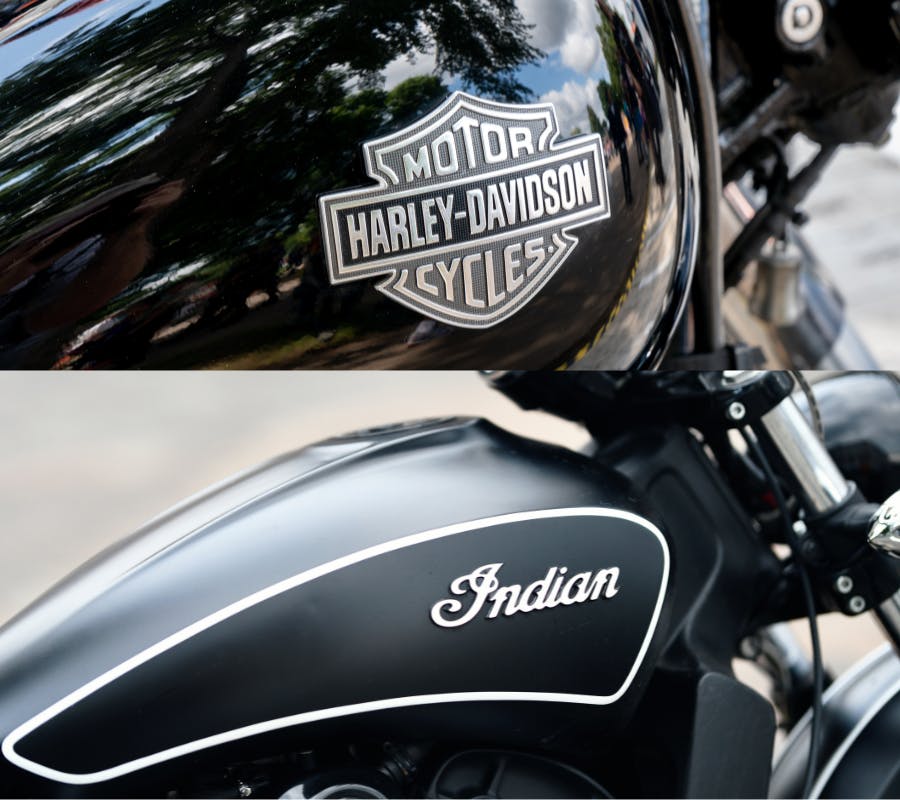
Harley-Davidson has been building motorcycles since 1903 and Indian's been at it since 1901. Together, they've spent over a century shaping what American motorcycle riding looks, sounds, and feels like. But the Harley-Davidson vs. Indian conversation in 2026 looks nothing like it did even five years ago. Indian just became a standalone company under new ownership, Harley's refreshed its entire touring lineup, and both brands are loading their bikes with tech that would've been unthinkable a decade ago.
In this blog, we're breaking down the data on engines, pricing, standard features, resale value, dealer networks, and community support so you can make this call based on real numbers. This is a balanced Indian vs. Harley comparison built to help you figure out which American motorcycle brand actually fits the way you ride.
A Quick Look at Both Brands
Both of these American motorcycle brands have been around for more than a century, but they've taken very different paths to get where they are today.
- Indian Motorcycle was founded in 1901 in Springfield, Massachusetts, making it the oldest major motorcycle brand in the U.S.
- The original company shut down in 1953 and went through several revivals before Polaris Industries brought it back in 2011
- As of February 2, 2026, Carolwood LP officially acquired a controlling interest from Polaris, making Indian a standalone company for the first time in its modern era
- Harley-Davidson was founded in 1903 in Milwaukee, Wisconsin, and it's been in continuous production ever since
- Harley is publicly traded on the NYSE (ticker: HOG) and remains the largest American motorcycle manufacturer by sales
Milwaukee-Eight 117 vs. PowerPlus 112 Engine Comparison
The engine is usually the first thing riders want to compare in the Harley Indian rivalry, and these two brands take very different approaches to making power.
Harley-Davidson Milwaukee-Eight 117
- Displacement: 117 cubic inches (1,923cc)
- Cooling: Liquid-cooled cylinder heads with air-cooled body
- Power: ~105 hp and 129 lb-ft of torque at 3,250 RPM
- Character: Strong low-end power, deep V-twin sound, pulls hard right off idle
This is Harley's standard engine across its 2026 Grand American Touring lineup, including the Street Glide and Road Glide. It's built for the kind of instant, low-end power that Harley riders have always loved.
Indian PowerPlus 112
- Displacement: 112 cubic inches (1,834cc)
- Cooling: Fully liquid-cooled
- Power: 126 hp and 133 lb-ft of torque at 3,600 RPM
- Character: Higher-revving, smoother power delivery, more top-end pull
Indian's PowerPlus 112 is the engine behind the Chieftain PowerPlus, Challenger, Roadmaster, and Pursuit. It's also the same platform that won three MotoAmerica King of the Baggers championships.
The Key Differences Between These Engines
- Harley wins on low-end torque. It hits peak torque at 3,250 RPM, which gives it that instant punch from a stop
- Indian wins on horsepower. The PowerPlus 112 puts out 126 hp compared to about 105 hp from the Milwaukee-Eight 117
- Indian runs cooler. Full liquid cooling handles heat better in traffic and on hot days compared to Harley's partial liquid cooling
- Harley has the traditional feel. That classic V-twin character with heavy low-end pull? The Milwaukee-Eight still does that better than anything else on the market
Harley & Indian 2026 Pricing Breakdown
The gap between these two brands isn't as wide as most people expect when comparing Harley and Indian’s 2026 prices. Depending on the trim level, you might actually pay more for a Harley than a comparable Indian, or the other way around.
Touring and Bagger Models (2026 MSRP)
- Harley-Davidson Street Glide: $27,750
- Indian Chieftain PowerPlus Limited (108): $28,749
- Harley-Davidson Road Glide: $30,199
- Indian Chieftain PowerPlus Limited (112): $32,499
- Harley-Davidson Street Glide Limited: $32,999
- Harley-Davidson Road Glide Limited: $32,999
Sources: Harley-Davidson, Indian Motorcycle
Sport and Cruiser Models (2026 MSRP)
- Harley-Davidson Nightster: $9,999
- Harley-Davidson Nightster Special: $12,499
- Indian Scout lineup: starting around $12,000 to $15,000 depending on trim
- Harley-Davidson Sportster S: $15,999
Why Are Indian Motorcycles More Expensive?
Indian's touring bikes tend to cost more because they include features that Harley either doesn't offer or charges extra for. On the PowerPlus 112 models, you're getting:
- A fully liquid-cooled engine (more expensive to manufacture)
- Electronically adjustable windshield as standard
- Blind spot warning, tailgate warning, and rear collision warning
- Bike hold control and Smart Lean technology with lean-sensitive ABS
That said, Harley's base Street Glide at $27,750 is one of the most competitive entry points into the American bagger market, and it still comes loaded with the Skyline OS infotainment system, Apple CarPlay, ride modes, and a full suite of rider safety features.
The Challenger vs. Road Glide Bagger Matchup
The Challenger and Road Glide are the two most cross-shopped frame-mounted-fairing baggers in the American touring segment, and the Challenger vs Road Glide decision usually comes down to power from the factory vs. aftermarket support and lighter weight.
Indian Challenger (PowerPlus 112)
- 126 hp and 133 lb-ft of torque
- Fully liquid-cooled DOHC V-twin
- Ride Command infotainment with Apple CarPlay
- Smart Lean tech with lean-sensitive ABS and traction control
- Electronically adjustable windshield (standard)
- Radar-based rider assist on 112 models
Harley-Davidson Road Glide (Milwaukee-Eight 117)
- ~105 hp and 129 lb-ft of torque
- Liquid-cooled heads, pushrod OHV V-twin
- Skyline OS 12.3" touchscreen with Apple CarPlay
- Cornering rider safety enhancements
- Updated Sharknose fairing with CFD-optimized aerodynamics for 2026
- Drag-torque slip control and vehicle hold control standard
The Challenger has more raw power and more standard safety tech, while the Road Glide brings a lighter overall package, Harley's iconic Sharknose fairing, and the aftermarket support that comes with being the most popular American bagger on the road. Most riders who test both end up choosing based on how they feel in the saddle rather than what's on the spec sheet.
Scout vs. Sportster at the Entry Level
The Scout vs Sportster comparison is where a lot of newer riders and budget-conscious buyers start looking, and these two bikes couldn't feel more different despite filling the same spot in each lineup.
Indian Scout
- 1,133cc liquid-cooled V-twin making 100 hp and 72 lb-ft of torque
- Low 25.6" seat height
- Classic cruiser styling with a relaxed riding position
- Multiple trims (Scout, Scout Bobber, Scout Sixty, Sport Scout)
Harley-Davidson Sportster S
- 1,252cc Revolution Max 1250T making 121 hp and 94 lb-ft of torque
- 29.6" seat height
- Sport-cruiser styling with a more aggressive position
- TFT display, ride modes, cornering ABS, and traction control all standard
How to Choose Between Them
- Pick the Scout if you want a lower seat height, a more traditional cruiser look, and a broader range of trims at different price points
- Pick the Sportster S if you want more power, more electronics, and a more modern sport-cruiser feel
- Both brands offer capable, fun V-twins at this level, so test riding each one is the best way to decide
Which Holds Value Better, Harley or Indian?
Resale value is one of the biggest factors in the true cost of ownership, and Harley-Davidson holds its value better than Indian as a general rule.
Why Harley Wins on Resale
- Bigger buyer pool. More riders in the market for used Harleys means more demand and stronger prices
- Cultural brand status. Harleys carry a lifestyle premium that holds up on the used market
- Aftermarket ecosystem. The massive parts and accessories industry around Harley keeps used bikes desirable and easy to customize
- 120+ years of continuous production. Buyers trust that Harley parts and dealer support will be there long-term
Indian motorcycles hold their value well too, especially well-maintained touring models. But they don't match Harley's resale numbers at this point. That could shift as the brand matures under its new ownership, but for now, which holds value better Harley or Indian isn't a close contest.
Dealer Network and Community
The riding community and dealer support around your bike can make or break the ownership experience, and this is where the gap between these two brands is the widest.
Harley-Davidson
- Over 1,400 HOG (Harley Owners Group) chapters worldwide
- Extensive dealer network across all 50 states
- Two loyalty credit card programs (US Bank HD Visa and Harley-Davidson Experience Card)
- The largest third-party aftermarket parts ecosystem in motorcycling
- Year-round events, rallies, and organized rides through local HOG chapters
Indian Motorcycle
- IMRG (Indian Motorcycle Riders Group) is growing but still much smaller than HOG
- Dealer network has been expanding but doesn't match Harley's footprint yet
- Strong presence at major events like Sturgis and Daytona Bike Week
- New ownership under Carolwood LP has committed to stronger dealer support
- About 900 employees transitioned with the brand to the new standalone company
Harley's 1,400+ HOG chapters give you a built-in riding network everywhere you go. Indian's IMRG is working to catch up, but it's not at that level yet.
Is Indian Owned by Harley?
No. This comes up all the time, but Indian Motorcycle isn't and has never been owned by Harley-Davidson. The two brands have always been separate companies, and that's still true today under Indian's new ownership structure.
- 1901 to 1953: Indian operated as an independent company
- 2011: Polaris Industries acquired the Indian brand and relaunched it with all-new bikes
- October 2025: Polaris announced the sale of a majority stake to Carolwood LP, a Los Angeles-based private equity firm
- February 2, 2026: Carolwood officially closed the deal, and Indian became a standalone company
What This Means for Buyers in 2026
- Indian now operates independently with CEO Mike Kennedy (a former Harley-Davidson and Vance & Hines executive) at the helm
- Polaris still holds a minority stake but no longer controls the brand
- Manufacturing stays in the U.S., with facilities in Spirit Lake, Iowa, and Monticello, Minnesota
- 2026 marks Indian's 125th anniversary, which the brand is using as a launchpad for what's next
- Harley remains publicly traded (NYSE: HOG) with the transparency and stability that comes with that structure
Standard Features on Harley-Davidson vs. Indian Touring Bikes
Both brands come loaded with tech on their touring bikes for 2026, and the overlap is bigger than you might expect. The real differences show up in the safety features and cooling systems.
What Both Brands Include Standard
- ABS and electronically linked braking
- Traction control
- Infotainment with Apple CarPlay
- Cruise control
- LED lighting
- Hard saddlebags
- 2-year unlimited mileage warranty
Where Indian Adds More
- Electronically adjustable windshield (Harley's is fixed on base models)
- Blind spot warning, tailgate warning, and rear collision warning on PowerPlus 112 models
- Bike hold control
- Fully liquid-cooled engine across all touring models
Where Harley Adds More
- Drag-torque slip control
- Cornering enhancements
- Vehicle hold control and TPMS on all Grand American Touring models
- Skyline OS 12.3" touchscreen with turn-by-turn navigation
- Selectable ride modes standard across the lineup
Both brands are loading their bikes with tech at this point. The biggest difference is Indian's radar-based rider assist package on 112 PowerPlus models, which gives it a clear edge in safety tech for touring riders.
So, Which Brand Should You Choose?
There's no one-size-fits-all answer to the Harley-Davidson vs Indian question. It really comes down to what you prioritize as a rider.
You might prefer Harley-Davidson if you value…
- Stronger resale value over time
- Access to 1,400+ HOG chapters and the biggest riding community in motorcycling
- That classic low-end torque and traditional V-twin sound
- The largest aftermarket parts and accessories ecosystem
- The stability of a publicly traded, 120+ year-old company
You might prefer an Indian Motorcycle if you value…
- More horsepower and top-end performance from the factory
- More standard safety technology on touring models
- A fully liquid-cooled engine that handles heat better on long rides
- A brand entering a new chapter of independence with fresh leadership
- Something different from what everyone else on the road is riding
How a bike feels after 200 miles, how it handles your favorite road, how comfortable it is when you don't want to stop riding, that's what makes the call for most people. Test riding both of these brands is the easiest way to compare what works for you personally.
Rent a Harley or Indian Motorcycle on Riders Share
Putting real miles on both brands is where Harley and Indian start to separate themselves. Riders Share lets you book Harley-Davidson rentals and Indian motorcycle rentals so you can experience each bike in real riding conditions, not just a short dealership loop. Whether you’re looking at touring, baggers, or cruiser rentals, a full day or weekend ride shows you how each bike handles distance, comfort, and the roads you actually ride. Start your search for the perfect Harley or Indian motorcycle on Riders Share today.
Harley vs. Indian FAQ
For riders who’ve read through and just want a few things confirmed, this section clears up the details that usually come up at the end.
Is Indian better than Harley-Davidson?
Neither brand is objectively "better." Indian offers more horsepower (126 hp vs. ~105 hp on touring models), a fully liquid-cooled engine, and more standard safety tech. Harley offers stronger resale value, a bigger community with 1,400+ HOG chapters, and the classic V-twin feel that's defined American motorcycling for over a century. The right pick depends on what matters most to you.
Which holds value better, Harley or Indian?
Harley-Davidson. It's the stronger brand on the used market thanks to its larger following, cultural status, and the massive aftermarket ecosystem that keeps used Harleys in demand. Indian holds its value well too, but it doesn't match Harley's resale numbers right now.
Is Indian owned by Harley?
No. Indian has never been owned by Harley-Davidson. Indian was under Polaris Industries from 2011 until February 2026, when Carolwood LP completed its acquisition of a controlling interest. Indian now operates as a standalone company with Polaris holding a minority stake.
Why are Indian motorcycles more expensive?
Indian's touring models include more standard features, like a fully liquid-cooled engine, electronically adjustable windshield, and radar-based rider assist technology on PowerPlus 112 bikes. Those extras add to manufacturing costs, which shows up in the MSRP.
Related Articles
Mon - Fri: 8-8 CT
Weekends: 9-8 CT
